What Is a Stable Disc? The Neutral Middle Every Bag Needs

Quick Comparison
| Product | Speed↑ | Glide↑ | Turn↑ | Fade↑ | Best For | Price |
|---|---|---|---|---|---|---|
| 2 | 3 | 0 | 1 | New players who want a straight, honest putter for putting and short approaches | Check Price | |
| 5 | 4 | -1 | 1 | Players who want one trustworthy straight midrange for the bulk of their shots | Check Price | |
| 7 | 5 | 0 | 2 | Players wanting a straight, accurate fairway driver for controlled tee shots | Check Price | |
| 11 | 5 | -1 | 3 | Players ready for a distance driver that flies long and reasonably straight with power | Check Price |


New players who want a straight, honest putter for putting and short approaches
Check Price on AmazonPlayers who want one trustworthy straight midrange for the bulk of their shots
Check Price on AmazonPlayers wanting a straight, accurate fairway driver for controlled tee shots
Check Price on AmazonPlayers ready for a distance driver that flies long and reasonably straight with power
Check Price on AmazonA stable disc flies straight. It does not turn over to the right, it does not fade hard to the left, it just holds the line you put it on and lands close to where you aimed. That predictability is exactly why a stable disc in each category - putter, midrange, fairway driver, distance driver - is the backbone of a controllable bag, and why it matters most for newer players still learning what their throw actually does.
Most disc golf advice fixates on the two extremes: overstable discs that fight back against your power, and understable discs that flip and turn. Those have their place, and we cover them in depth in our overstable vs understable guide. But the discs you will reach for most often are the ones in the middle. A straight-flying, neutral disc removes a variable from every throw - you aim, you release flat, and the disc does what you told it to.
This article is about that middle. We will define what "stable" really means, explain why it is its own useful category rather than a boring compromise, show how a stable disc changes as it wears in, and recommend a specific straight flyer for every slot in your bag.
What Does Stable Mean in Disc Golf?
In the strictest sense, a stable disc flies straight from release to landing with no significant turn and no significant fade. Throw it flat with normal power and it tracks a straight line, then drops with only a gentle finish. It is the neutral middle of the stability spectrum, sitting between overstable (fights to the left for a right-handed backhand throw) and understable (banks to the right before fading).
Here is where it gets confusing. The word "stable" gets used loosely. Some players and shops use "stable" to mean "overstable," as in "this disc is stable, it will hold up in the wind." Others use it the way we are using it here: dead straight, neutral. When someone hands you a disc and calls it stable, ask one follow-up question - does it fly straight, or does it finish left? That single answer tells you what you actually need to know.
For this guide, stable means neutral and straight. You can read a stable disc directly off its flight numbers. The third number is turn (0 to -5, where more negative means more turn) and the fourth is fade (0 to 5, where higher means a harder finish). A stable disc has a turn close to 0 and a low fade, usually 1 or 2. A disc rated 5 | 4 | -1 | 1 is a textbook stable midrange. If the turn is -3 or -4, you are looking at an understable disc; if the fade is 3 or higher with 0 turn, that is overstable. For a full breakdown of how to read every digit, see our guide to disc golf numbers explained.
Why is straight its own category and not just a lack of personality? Because a disc that flies straight lets you take the basket on directly. Overstable discs need you to aim right and let them work back; understable discs need you to aim left and let them flip back. A stable disc lets you point at the target and throw at the target. On a tight tunnel shot through trees, that is the difference between threading the gap and clipping a trunk.
A stable disc is also the best teacher. When a throw goes wrong with a neutral disc, the disc is not adding its own curve on top of your mistake - if it turned over, you released it on anhyzer or threw it too hard; if it faded early, you released it on hyzer or did not give it enough speed. Overstable and understable discs mask form errors behind their built-in flight shape, which is why a bag full of extremes is a hard way to learn.
How a Stable Disc Changes as It Wears In
A stable disc does not stay stable forever, and this surprises a lot of newer players: discs change flight as they get used. The general rule is that discs become more understable over time. A stable disc, thrown for months, beats in and starts to turn - it seasons toward understable.
The reason is physical. Every tree hit, every skip across a cart path, every landing nicks and rounds the disc's edge and flattens its dome, and a worn profile turns more easily than a sharp one. So a disc that flew dead straight when new will, after a season of hard use, start to flip a little to the right on full-power throws. That is not damage in the bad sense - many players love a slightly beat-in disc because the turn adds distance and a workable flex line.
Plastic type controls how fast this happens, and it is the single most useful lever you have:
- Premium plastics (Innova Star and Champion, Discraft ESP and Z, Latitude 64 Opto and Gold) are durable and hold their original flight far longer. A stable disc in premium plastic stays stable for a long time before it ever seasons toward understable.
- Baseline plastics (Innova DX, Discraft Pro-D, Latitude 64 Zero) are grippier and cheaper but wear fast. A stable disc in baseline plastic can beat in within a few months of regular play, turning understable noticeably sooner.
This gives you a practical strategy. If you want a stable disc that stays straight and predictable for years, buy it in premium plastic. If you actually want an understable disc and you are patient, buy a stable disc in baseline plastic and throw it hard - it will season into a flippy, distance-friendly disc on its own. When you pick a stable disc, you are also picking how long it stays stable, so match the plastic to how you intend to use it.
The Best Stable Discs for Each Slot
A controllable bag is built on one reliable straight flyer in every category. Learn each disc below cold and you can play most courses without ever reaching for an extreme. Every one is genuinely neutral, and we have noted the plastic so you know how long it holds that flight. For more on how the categories differ, see our overview of types of disc golf discs.
Innova DX Aviar (Stable Putter)
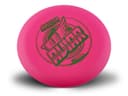
Innova DX Aviar Putt and Approach
New players who want a straight, honest putter for putting and short approaches
Pros
- Genuinely neutral flight, zero turn and minimal fade
- Soft DX plastic gives a consistent, grippy feel for putting
- The most proven putter mold in the sport
- Cheap enough to buy several and practice with a stack
Cons
- DX plastic wears faster than premium options on approach throws
- Less wind resistance than an overstable putter
- Beadless rim feel is not for everyone - some prefer a bead
The Aviar is the most thrown putter in disc golf history, and the standard beadless DX version is about as neutral as a disc gets. With flight numbers of 2 | 3 | 0 | 1, it has zero turn and the gentlest possible fade - set it on a line at the basket and it tracks straight in. That is exactly what you want from a putter: you should be reading the chains, not correcting for the disc.
DX is a baseline plastic, and that is intentional. For a putter you grip the same way every time, the soft, tacky DX surface gives a consistent feel premium plastics cannot match, and putters live a gentle life so even DX holds its flight well. If it eventually wears, a slightly beat-in Aviar becomes an easy straight-to-understable approach disc. This is the disc to learn putting on - it will not fight you, and because it flies so honestly, every miss tells you something true about your form.
Discraft Buzzz (Stable Midrange)

Discraft Buzzz
Players who want one trustworthy straight midrange for the bulk of their shots
Pros
- Textbook neutral flight - holds any angle you release it on
- Premium Z and ESP plastic keep it stable for years
- The most widely used midrange, so feedback and advice are everywhere
- Comfortable, universal rim shape
Cons
- A true workhorse, not exciting - it does only one thing
- Needs reasonable snap to fly its full distance
- In strong headwind it will turn before a more overstable mid would
If there is a single disc that defines "stable," it is the Buzzz. Flight numbers of 5 | 4 | -1 | 1 describe a midrange that holds whatever angle you give it: throw it flat and it flies flat, throw it on hyzer and it holds the hyzer the whole way. The slight -1 turn keeps it from being pushy, and the gentle 1 fade means it finishes soft instead of dumping left. It is the most popular midrange in disc golf, and it earned that spot by being reliable.
Buy the Buzzz in premium plastic - Z or ESP - and it stays this neutral for years. That durability is the point: a midrange this central to your game should not be quietly seasoning understable on you mid-season. Discraft makes understable (Buzzz SS) and overstable (Buzzz OS) versions if you want them later, but the standard Buzzz is the one to learn first because it teaches a true, repeatable straight line. Once you trust a Buzzz, most holes under 300 feet can be played with a controlled, straight midrange. We go deeper on this disc in our Discraft Buzzz review.
Innova TeeBird (Stable Fairway Driver)
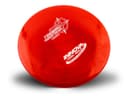
Innova Star TeeBird Fairway Driver
Players wanting a straight, accurate fairway driver for controlled tee shots
Pros
- Straight flight with a controlled, predictable fade
- Durable Star plastic holds the neutral flight for a long time
- Easy to throw accurately, ideal for tight wooded lines
- Ages into an easy, slightly understable distance disc
Cons
- Not a maximum-distance disc - control over raw power
- The fade of 2 needs to be accounted for on dead-straight finishes
- Faster players may find it too modest for open-field drives
The TeeBird is the benchmark stable fairway driver. With numbers of 7 | 5 | 0 | 2, it has zero turn and a moderate, dependable fade - it flies straight through the power part of its flight, then finishes with a predictable, gentle hook. That makes it the disc for tunnel shots, low-ceiling drives, and any hole where you need to point at a gap and trust the disc to go through it.
In Star plastic the TeeBird holds this stable flight a long time. The fade of 2 gives it a reliable finish without making it feel overstable - you still get a long, straight flight, not an early dump to the left. As it eventually wears, the TeeBird seasons gracefully into a straighter, slightly understable flyer.
One caveat about power: "stable" depends on your arm. A strong thrower gets a dead-straight flight from a TeeBird, while a developing thrower may find it fades early and behaves overstable. If you do not yet generate big arm speed, the slightly understable Latitude 64 Opto River (7 | 7 | -1 | 1) flies straighter and farther for you with its higher glide and gentle turn. Lean on the River while you are building arm speed, the TeeBird once you have it.
Innova Wraith (Stable Distance Driver)
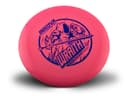
Innova Star Wraith Distance Driver
Players ready for a distance driver that flies long and reasonably straight with power
Pros
- One of the more neutral, workable distance drivers available
- Long, smooth S-curve flight with enough arm speed
- Durable Star plastic holds the flight for years
- Seasons into an exceptionally easy long-distance disc
Cons
- Requires real arm speed - useless as a beginner's first driver
- Underthrown, it fades out early and flies short
- The fade of 3 is a strong finish to plan around
Distance drivers are rarely truly neutral - at speed 11 and above, almost everything has some built-in shape. Among distance drivers, the Wraith is one of the most neutral, workable options: 11 | 5 | -1 | 3 means a touch of turn through the fast part of the flight and a reliable fade to finish. Thrown with real power, it produces a long, gentle S-curve and lands predictably, which is about as straight as a distance driver flight gets.
The Wraith only makes sense once you have arm speed. A speed 11 disc thrown without enough power will not turn at all - it will just fade out early and short, behaving overstable. That is the most common mistake newer players make with distance drivers, and it is why the TeeBird and River should come first. When you can throw a fairway driver 300-plus feet, the Wraith is the natural next step. In Star plastic it holds its flight for years; as it wears, the -1 turn deepens and a beat-in Wraith becomes one of the longest, easiest discs many players own.
When to Throw a Stable Disc vs an Overstable or Understable One
Owning a stable disc in each slot does not mean you never throw the extremes. It means you start from a neutral default and reach for an extreme only when the hole asks for it.
Throw a stable disc when the hole is straight and you want to point at the target and throw at it, when you are threading a tight tunnel that needs the disc to go where you aim, when it is calm, or when you are unsure what the hole needs - the neutral disc is the safe default.
Throw an overstable disc when you are facing a headwind (which makes any disc act more understable), when the hole demands a controlled finish to the left for a right-handed backhand throw, or when you are throwing at high power and your stable disc is turning over more than you want.
Throw an understable disc when the hole curves right and you want the disc to follow it, when you have a tailwind, when you are a lower-power player who needs help reaching full distance, or when you want a roller.
Notice that wind flips the logic. A headwind makes every disc behave more understable, so you reach for something more overstable to compensate; a tailwind does the reverse. Your stable disc is the calm-weather, straight-hole default - the extremes are answers to specific questions. Full detail on choosing between the two extremes is in our overstable vs understable guide.
Frequently Asked Questions
What is a stable disc in disc golf?
A stable disc flies straight - it neither turns over to the right nor fades hard to the left when thrown flat with normal power. It sits in the neutral middle of the stability spectrum between overstable and understable discs, with a turn close to 0 and a low fade of 1 or 2.
Does "stable" mean the same thing as "overstable"?
No, though the words get mixed up constantly. In careful usage, "stable" means neutral and straight, while some players use it casually to mean "overstable" (holds up in wind). When in doubt, ask whether the disc flies straight or finishes left - that answer is what matters.
Is a stable disc good for beginners?
Yes. A stable disc is the best choice for newer players because it flies honestly and gives clean feedback on your form rather than masking mistakes behind a built-in curve. A straight putter, midrange, and fairway driver are the ideal starting point for a controllable bag.
Do stable discs become understable over time?
Yes. Discs generally become more understable as they wear in. A stable disc thrown for months will beat in - edges round off and the dome flattens - and start to turn. Premium plastics slow this down a lot; baseline plastics speed it up.
How can I tell if a disc is stable from its flight numbers?
Look at the last two numbers: turn and fade. A stable disc has a turn near 0 (roughly 0 to -1) and a low fade of 1 or 2. A disc like 5 | 4 | -1 | 1 is stable. If the turn is -3 or lower, it is understable; if the fade is 3 or higher with 0 turn, it is overstable.
What plastic should I buy a stable disc in?
Buy it in premium plastic (Innova Star or Champion, Discraft Z or ESP, Latitude 64 Opto) if you want it to stay straight for years. Buy it in baseline plastic (DX, Pro-D, Zero) if you want it to beat in and season toward understable over a season of play.
Final Thoughts
A stable disc is not the boring choice or the compromise. It is the disc you point at the basket and trust to get there. A straight flyer in each slot - putter, midrange, fairway, and eventually distance driver - gives you a bag where you can play the obvious line on most holes without doing mental math to correct for the disc's personality.
Start with the Innova DX Aviar and the Discraft Buzzz. Those two cover putting, approaches, and the bulk of your mid-range shots, and they teach a true straight throw faster than any pair of extremes. Add the Innova TeeBird or the Latitude 64 River for fairway driving, choosing the one that matches your current power, and when your arm speed catches up, the Innova Wraith is the distance driver that grows with you.
Buy them in premium plastic if you want them to stay straight, and remember that even a stable disc slowly seasons understable - which is not a problem, just the next chapter of that disc's life. Master the neutral middle first, and the extremes become tools instead of crutches.
Affiliate Disclosure
This post contains affiliate links. As an Amazon Associate, Pine Tree Disc earns from qualifying purchases at no additional cost to you. Learn more
Isaac "Steaks" Salisbury is the Maine native who founded Pine Tree Disc Golf. He's been throwing plastic through Maine's forests and fairways for years and started Pine Tree to build disc golf gear and content that players can wear and trust on and off the course.
Learn more about Pine Tree Disc →