Types of Disc Golf Discs: Putters, Mids, Fairways, and Drivers Explained

Quick Comparison
| Product | Best For | Price |
|---|---|---|
Learning to putt with a straight-flying, reliable disc that has been a gold standard for decades | Check Price | |
Players who want a slightly firmer, more overstable putter for both putting and approach shots | Check Price | |
The most versatile midrange in the game - straight flights with minimal fade that every skill level can rely on | Check Price | |
Dead-straight flights with maximum glide - the best midrange for learning disc angles | Check Price | |
Beginners who want a fairway driver that turns easily and flies far without requiring huge arm speed | Check Price | |
Maximum glide in a fairway driver - this disc floats farther on less power than almost any driver | Check Price | |
An intermediate player's first distance driver - fast enough for real distance but stable enough to be predictable | Check Price | |
The most beginner-friendly distance driver available - the understable flight does the work for developing arm speeds | Check Price |


Learning to putt with a straight-flying, reliable disc that has been a gold standard for decades
Check Price on AmazonPlayers who want a slightly firmer, more overstable putter for both putting and approach shots
Check Price on AmazonThe most versatile midrange in the game - straight flights with minimal fade that every skill level can rely on
Check Price on AmazonDead-straight flights with maximum glide - the best midrange for learning disc angles
Check Price on AmazonBeginners who want a fairway driver that turns easily and flies far without requiring huge arm speed
Check Price on AmazonMaximum glide in a fairway driver - this disc floats farther on less power than almost any driver
Check Price on AmazonAn intermediate player's first distance driver - fast enough for real distance but stable enough to be predictable
Check Price on AmazonThe most beginner-friendly distance driver available - the understable flight does the work for developing arm speeds
Check Price on AmazonWalk into any disc golf shop and you'll see walls of plastic that all look vaguely the same. Round, flat-ish, colorful. But pick two discs off the rack and you'll feel the difference immediately. One has a thin, blunt rim you can wrap your fingers around. The other has a wide, sharp-edged rim that feels like holding a dinner plate. They're built for completely different jobs.
Understanding the types of disc golf discs is the single most important thing you can learn before building your bag. It's like understanding that golf has irons, wedges, and drivers - you wouldn't tee off with a putter, and you wouldn't putt with a driver. Disc golf works the same way, except the differences are baked into the physical shape of each disc rather than the length of a club shaft.
Here's the truth that will save you months of frustration: most beginners buy the wrong types of discs. They grab a high-speed distance driver because it promises maximum distance, then wonder why every throw hooks hard left and lands 150 feet away. The disc isn't broken. It's designed for an arm speed they haven't developed yet. This guide will make sure you don't fall into that trap.
The Four Types of Disc Golf Discs
Every disc golf disc falls into one of four categories based on its speed rating and intended use: putters, midranges, fairway drivers, and distance drivers. The speed rating - the first of the four flight numbers printed on every disc - tells you which category a disc belongs to.
But speed isn't just a number. It's a physical property you can see and feel. The faster a disc is designed to fly, the wider its rim needs to be. A putter rim is about 10mm wide - roughly the width of your pinky finger. A distance driver rim can be 21mm or wider - more than double that. This wider rim creates a larger aerodynamic wing profile that cuts through the air at higher velocities.
Think of it this way: a putter is a compact car built for city driving. It's easy to handle, predictable, and does exactly what you expect. A distance driver is a sports car built for the highway. Powerful in the right hands, but difficult to control if you're still learning to drive.
Here's a quick breakdown before we dig into each type:
Disc Type: Putter | Speed Range: 1-3 | Rim Width: ~10mm | Typical Distance: 50-200 ft | Primary Use: Putting, short approaches
Disc Type: Midrange | Speed Range: 4-6 | Rim Width: ~13-15mm | Typical Distance: 150-300 ft | Primary Use: Approaches, short drives
Disc Type: Fairway Driver | Speed Range: 7-9 | Rim Width: ~16-18mm | Typical Distance: 250-375 ft | Primary Use: Controlled drives, shaping lines
Disc Type: Distance Driver | Speed Range: 10-14 | Rim Width: ~20-24mm | Typical Distance: 300-500+ ft | Primary Use: Maximum distance
Putters (Speed 1-3)
What Makes a Putter a Putter
Putters are the slowest, most controllable discs in the game. You can identify one instantly by its blunt, rounded rim and deep dish profile. That thick rim fits comfortably in your hand, and the deep flight plate gives you a secure, confident grip - which matters when you're standing over a 25-foot putt and your hands are sweating.
Physically, putters have the smallest rim width of any disc type, usually around 10-13mm. Their flight plates tend to be deeper (more dome) than other disc types, which helps them fly straight at low speeds. The combination of a narrow rim and deep profile means putters generate very little aerodynamic lift compared to drivers. They rely on a clean release and proper nose angle rather than raw speed.
Flight numbers on putters are modest: speed 1-3, glide 2-4, with minimal turn and fade. This means they fly short, stay relatively straight, and don't do anything dramatic. That predictability is exactly the point.
When to Use Putters
The obvious answer is putting - any throw inside about 75 feet where you're aiming at the basket. But putters are far more versatile than that.
Approach shots (75-200 feet): When you need to land a disc close to the pin from short range, a putter thrown with moderate power is more accurate than a midrange thrown softly. Discs thrown at the lower end of their speed range are harder to control, so it's better to power up a slow disc than power down a fast one.
Upshots in the woods: Putters don't skip or slide much when they land. On a wooded course where you need the disc to stick where it hits, a putter is your best friend.
Practice and form development: Every serious disc golfer will tell you the same thing - if you want better form, throw putters. Because putters expose every flaw in your technique. If you can throw a putter 250 feet on a straight line, you have genuinely good form.
Best Putters for Beginners
Innova DX Aviar
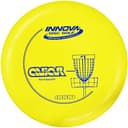
Innova DX Aviar Putt and Approach
Learning to putt with a straight-flying, reliable disc that has been a gold standard for decades
Pros
- Extremely affordable and widely available
- Straight flight path with predictable fade
- Comfortable grip that works for most hand sizes
- Decades of proven performance at every level
Cons
- DX plastic wears quickly if used for driving
- Can feel too "basic" compared to premium plastic options
- Slightly deep profile may not suit all grip styles
The Aviar is the best-selling putter in disc golf history, and for good reason. It flies dead straight with just a touch of fade at the end - predictable enough for a first-time player, reliable enough for a world champion. Paul McBeth won multiple world titles putting with Aviars before switching to Discraft.
The DX plastic is grippy and affordable, making it perfect for beginners who want to buy a stack of putters for practice. It does beat in faster than premium plastics, but for a putter, that's actually fine - a seasoned DX Aviar develops a slightly understable flight that many players prefer for straight-line putting.
Discraft Luna

Discraft Luna
Players who want a slightly firmer, more overstable putter for both putting and approach shots
Pros
- Reliable overstable finish for approach shots
- Jawbreaker plastic is tacky and grippy in all conditions
- Works well as both a putting putter and an approach disc
- Holds up better than most base plastics
Cons
- Slightly more overstable than ideal for dead-straight putts
- Higher price point than base plastic options
- Flight can be inconsistent across different plastic blends
The Luna is Paul McBeth's signature putter with Discraft, and it has quickly become one of the most popular putters on tour. It's a touch more overstable than the Aviar, which gives it a reliable fade at the end of its flight. That extra stability makes it a great choice for approach shots where you want the disc to hook gently toward the basket rather than sliding past.
The Jawbreaker plastic blend has a unique rubbery feel that provides excellent grip in all weather conditions. It's firmer than most base plastics, which gives you a clean, consistent release.
Midrange Discs (Speed 4-6)
What Makes a Midrange Different
Pick up a midrange disc and you'll notice it immediately feels wider than a putter. The rim is thicker - usually 13-15mm - and the overall diameter is similar but the wing profile is more pronounced. This wider rim allows the disc to cut through the air more efficiently at moderate speeds, giving you more distance without requiring a huge arm.
Midranges occupy the sweet spot between putters and drivers. They're fast enough to cover real distance (200-300 feet for most players) but slow enough to remain controllable and forgiving. The flight paths are predictable and the margin for error is generous - throw one a little off-angle and it will still end up somewhere reasonable.
If putters are the compact car and distance drivers are the sports car, midranges are the reliable sedan. Not flashy, but they get you where you need to go without drama.
When to Use Midranges
Approach shots (150-300 feet): This is the midrange's primary job. Any time you're too far for a putter throw but don't need the distance of a driver, you're in midrange territory.
Tee shots on short holes: Many disc golf holes are 250-300 feet long. A midrange off the tee gives you more control than a driver with essentially the same distance potential on shorter holes.
Wooded and technical courses: When you need to navigate tight gaps between trees, a midrange is easier to throw on a specific line than a driver. The lower speed means less lateral movement if you hit something, and the flight is more predictable at shorter distances.
Windy conditions: Midranges with low glide and overstable flight paths handle wind better than most drivers for their effective range. A headwind that turns a driver into a roller barely affects a stable midrange.
Best Midranges for Beginners
Discraft Buzzz
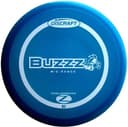
Discraft Buzzz
The most versatile midrange in the game - straight flights with minimal fade that every skill level can rely on
Pros
- Incredibly straight flight that reveals your form
- Versatile enough for hyzer, flat, and anhyzer lines
- Available in numerous plastic types to match your preference
- Holds its stability well even as it beats in
Cons
- Some players find the 5-speed slightly fast for a midrange
- Elite Z plastic can feel slick in wet conditions
- The perfectly neutral flight doesn't help players who need built-in correction
The Buzzz is to midranges what the Aviar is to putters - the gold standard. It flies straight with just a hint of high-speed turn and a gentle fade at the end. This neutral flight path means you can shape it in either direction with small adjustments to your release angle. Throw it flat and it goes straight. Put some hyzer on it and it fades reliably. Give it a little anhyzer and it will hold the line before finishing gently.
Virtually every competitive disc golfer has thrown a Buzzz at some point, and many never stop. It's the disc most instructors recommend when teaching form because it clearly shows what your release angle and nose angle are doing.
Innova Mako3
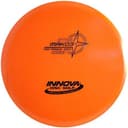
Innova Star Mako3
Dead-straight flights with maximum glide - the best midrange for learning disc angles
Pros
- Perfectly neutral flight exposes and teaches proper form
- Highest glide rating in the midrange category
- Goes exactly where you throw it - no surprises
- Excellent for tunnel shots and tight lines
Cons
- Zero fade means it won't fight back if you throw it off-angle
- Not useful for shots that require a hard finish left or right
- Can feel "too straight" for players who rely on disc stability
The Mako3 is the straightest midrange you'll find. With flight numbers of 5/5/0/0, it has zero turn and zero fade. Whatever angle you release it on, that's the angle it flies. This makes it both incredibly useful and brutally honest. If your disc turns over, that's your release angle talking, not the disc.
That 5 glide rating is the highest you'll see on a midrange, which means the Mako3 carries further on less power than almost any other mid. For beginners still developing arm speed, that extra glide translates directly into extra distance.
Fairway Drivers (Speed 7-9)
What Makes a Fairway Driver
Fairway drivers are where discs start feeling noticeably different from the putters and mids you've been handling. The rim widens to 16-18mm, and the overall profile becomes sleeker and more aerodynamic. You'll notice the edge is sharper and the dome is flatter compared to a midrange.
This increased rim width allows fairway drivers to maintain higher velocities through the air, which translates to more distance. But unlike distance drivers, fairway driver rims are still manageable for most hand sizes. You can wrap your fingers around the rim and get a clean grip without struggling.
Speed ratings of 7-9 mean fairway drivers need moderate arm speed to fly correctly - more than a midrange but significantly less than a distance driver. For many recreational and intermediate players, fairway drivers are the fastest discs they can throw properly. And that's perfectly fine, because a well-thrown fairway driver goes farther than a poorly thrown distance driver every single time.
When to Use Fairway Drivers
Tee shots on most holes: Unless you're on a very short hole (putter/mid territory) or a very long hole (distance driver territory), a fairway driver is often the right play. The combination of distance and control makes it the most practical tee shot disc for intermediate players.
Controlled distance shots: When you need distance but also need accuracy - threading a gap 300 feet away, placing a shot on a specific side of the fairway, or reaching a dogleg - fairway drivers give you both.
Shaping lines: Fairway drivers are responsive to release angles. You can throw hyzer flips, turnovers, flex shots, and controlled s-curves more easily with a fairway driver than a distance driver because the lower speed gives you more time to see the disc's path develop.
Headwind situations: An overstable fairway driver in a moderate headwind often performs better than a distance driver. The lower speed rating means the wind has less effect on the disc's high-speed stability.
Best Fairway Drivers for Beginners
Innova Leopard3
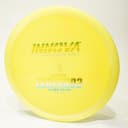
Innova Champion Leopard3
Beginners who want a fairway driver that turns easily and flies far without requiring huge arm speed
Pros
- Understable flight makes it easy to throw far with moderate arm speed
- Excellent for learning hyzer flips and turnover shots
- Champion plastic holds up through heavy use
- High glide (5) carries the disc further on less power
Cons
- Can become too understable for more advanced players
- Not reliable in headwinds due to its understable nature
- May turn and burn for players who already have strong arm speed
The Leopard3 is one of the most recommended fairway drivers for newer players because its understable flight does the work your arm can't do yet. That -2 turn means the disc will naturally drift to the right (for right-handed backhand throws) during the fast part of its flight before gently fading back left. At moderate arm speeds, this creates a beautiful straight-to-slightly-right flight that covers serious distance.
As your arm speed develops, the Leopard3 becomes a shot-shaping tool. You can throw hyzer flips (releasing on a hyzer angle and letting the disc flip to flat), long turnovers, and smooth s-curves. The Champion plastic is durable enough to maintain its flight characteristics through countless rounds of tree hits.
Latitude 64 River
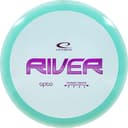
Latitude 64 Opto River
Maximum glide in a fairway driver - this disc floats farther on less power than almost any driver
Pros
- Highest glide rating in the fairway driver category - incredible carry
- Straight flight with minimal effort
- Opto plastic is durable and maintains flight characteristics
- Fantastic for wooded courses where finesse beats power
Cons
- The extreme glide can make it unpredictable in wind
- May fly too far right for players with higher arm speeds
- Less control on shorter, precision shots due to high glide
The River has the highest glide rating (7) of any commonly available fairway driver, and you can feel it the first time you throw one. It just hangs in the air, carrying effortlessly down the fairway. For beginners and players with moderate arm speed, the River is a distance machine that doesn't demand the arm speed of a faster disc.
The -1 turn and 1 fade make it gently understable, meaning it will fly mostly straight with a slight rightward drift before finishing with a soft fade. It's less aggressively understable than the Leopard3, which makes it a touch more versatile in light winds.
Distance Drivers (Speed 10-14)
What Makes a Distance Driver
Distance drivers are the biggest, widest, most aerodynamic discs in the game. Their rims are 20-24mm wide - noticeably wider than a fairway driver and sometimes uncomfortable for smaller hands. The overall profile is flat and sharp-edged, designed to slice through the air at high velocities with minimal drag.
This is where disc design gets aggressive. Distance drivers have the widest wing profiles, the sharpest edges, and the least forgiving flight characteristics. When thrown correctly with adequate arm speed (typically 55+ mph for moderate-speed drivers, 65+ mph for high-speed drivers), they produce the longest flights in disc golf. When thrown incorrectly or without enough speed, they produce the most frustrating flights in disc golf.
Here's the reality that every experienced player knows: most recreational players cannot throw distance drivers properly. That's not an insult. It's physics. A speed-13 driver requires arm speed that takes years of practice to develop. Throwing it before you're ready doesn't add distance - it removes it.
When to Use Distance Drivers
Open holes over 350 feet: When the fairway is wide and the hole is long, a distance driver is the right tool. You need the extra speed and carry to reach the pin.
Tailwind situations: A strong tailwind effectively adds speed to your disc, which means you can get a distance driver up to its intended velocity more easily. A disc that might be too fast for you in calm conditions can work beautifully with a 15 mph tailwind.
Courses with long, wide fairways: Some courses are built for distance. If you're playing an open, tournament-level course with 400-500 foot holes, distance drivers become necessary rather than optional.
When your form justifies it: If you can throw a midrange 300+ feet consistently with good form, you have the arm speed to start exploring distance drivers. If your midrange tops out at 200 feet, distance drivers will actively hurt your game.
Best Distance Drivers for Beginners
A note before these recommendations: "best distance drivers for beginners" comes with a giant asterisk. If you're truly new to disc golf, you do not need a distance driver yet. Start with putters and midranges, add a fairway driver, and only reach for a distance driver when your fairway driver consistently maxes out.
That said, when you're ready, these are the two most forgiving options.
Innova Star Wraith
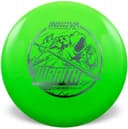
Innova Star Wraith
An intermediate player's first distance driver - fast enough for real distance but stable enough to be predictable
Pros
- Speed 11 is accessible for intermediate arm speeds
- Reliable, predictable flight path with a consistent fade
- Star plastic is grippy and durable
- Beats in to become straighter over time
Cons
- Still too fast for true beginners
- The 3 fade can be too much for lower arm speeds, resulting in a hard hook left
- Wide rim takes time to get comfortable gripping
The Wraith has been a staple distance driver for nearly two decades. At speed 11, it's fast but not absurdly fast - it doesn't require elite arm speed to get some useful flight out of it. The -1 turn gives it a slight high-speed drift to the right before the 3 fade brings it back with a reliable finish.
The Star plastic provides an excellent combination of grip, durability, and consistent flight. New Wraiths fly slightly overstable, which is actually ideal for a developing player - overstable discs are more predictable and wind-resistant. As the disc beats in over dozens of rounds, it will gradually become straighter and more versatile.
Innova DX Valkyrie
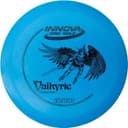
Innova DX Valkyrie
The most beginner-friendly distance driver available - the understable flight does the work for developing arm speeds
Pros
- Speed 9 bridges the gap between fairway and distance drivers
- Understable flight adds distance for developing arm speeds
- DX plastic is extremely affordable
- Versatile disc that grows with your game
Cons
- Beats in quickly in DX plastic, becoming very understable
- Not reliable in headwinds
- More experienced players will overpower it easily
Some people consider the Valkyrie a fairway driver because of its speed 9 rating, but Innova classifies it as a distance driver. Whatever you call it, the Valkyrie is the most forgiving entry point into faster discs. The -2 turn means it will flip up and turn to the right at moderate arm speeds, adding distance that your arm alone can't produce.
The DX plastic is affordable and beats in quickly, making the Valkyrie even more understable over time. Many experienced players keep a well-worn DX Valkyrie in their bag specifically for roller shots and big turnover lines. For beginners, a fresh one provides a gentle introduction to faster discs without the punishing fade of more overstable distance drivers.
How Disc Shape Affects Flight
Understanding why these four disc types fly differently comes down to one physical characteristic: the rim.
Rim Width Is Everything
The rim is the outer edge of the disc that you grip. It's also the primary aerodynamic surface that determines how the disc interacts with air. A wider rim creates a larger wing profile, which generates more lift at higher speeds. That's why distance drivers need wide rims - the disc is traveling so fast that it needs a substantial wing to maintain stable flight.
Putters have rims around 10mm wide. Midranges jump to 13-15mm. Fairway drivers sit at 16-18mm. Distance drivers range from 20-24mm. You can literally feel the speed difference by running your thumb along the rim.
Dome and Flight Plate
The dome - how much the top of the disc curves upward - also affects flight. A disc with more dome tends to generate more glide because the curved surface creates additional lift. Putters often have significant dome, which helps them float on approach shots. Distance drivers are typically flatter on top, trading glide for aerodynamic efficiency at high speeds.
Some discs within the same mold vary in dome height from run to run, which is why two "identical" discs can fly slightly differently. This is normal and part of what makes disc golf equipment interesting (and occasionally frustrating).
Wing Shape and Stability
The shape of the wing - specifically how the rim transitions from the top of the disc to the bottom edge - influences stability. A disc with a sharp, defined leading edge tends to be more overstable because it cuts through the air with less lift on the understable side. A disc with a rounder, more gradual edge tends to be more understable because the airflow generates more even lift across the wing.
This is why you can sometimes predict a disc's stability just by looking at it. A flat, sharp-edged disc with minimal dome? Probably overstable. A domey disc with a rounded, gradual rim? Probably understable.
How Many Discs Do You Actually Need?
The honest answer depends on your skill level, and it's almost certainly fewer than you think.
True Beginners (First 1-3 Months)
Three discs. That's it. One putter, one midrange, and one fairway driver. You could make a strong argument for just two - a putter and a midrange.
Why so few? Because learning to throw one disc well teaches you more than switching between six discs you throw poorly. Every disc in your bag is a variable. Fewer variables means faster learning.
A solid three-disc starter set: Innova DX Aviar (putter), Discraft Buzzz (midrange), and Innova Leopard3 (fairway driver). That covers every shot you'll encounter on a beginner-friendly course.
Intermediate Players (6-12 Months)
Six to ten discs. At this point, you understand what different discs do and you have enough arm speed to justify a wider selection. A typical intermediate bag might look like this:
- 2 putters (one for putting, one for approach shots)
- 2-3 midranges (understable, stable, and overstable)
- 2-3 fairway drivers (understable and stable, maybe overstable)
- 1-2 distance drivers (stable and understable)
Advanced Players
Fifteen to twenty-five discs. Advanced players carry multiple discs in each speed category to handle different shot shapes, wind conditions, and course layouts. At this level, you know exactly why each disc is in your bag and when you'll throw it.
But here's the key: advanced players got to that point by mastering fewer discs first. Don't skip ahead.
Common Mistakes When Choosing Disc Types
Mistake #1: Starting With Distance Drivers
This is the most common mistake in disc golf, bar none. New players see a speed-13 driver and think "more speed equals more distance." It doesn't. It equals more frustration. A distance driver thrown below its intended speed will fade out hard and fast, flying shorter and less accurately than a midrange thrown properly.
Start with putters and midranges. Period. Add a fairway driver when your midrange consistently flies 250+ feet. Add a distance driver when your fairway driver consistently flies 300+ feet.
Mistake #2: Carrying Too Many Discs Too Soon
Six months into disc golf, you don't need 20 discs. You need 5-6 discs that you understand completely. Knowing that your Buzzz fades 30 feet left from 250 feet is more valuable than owning 15 discs you've each thrown 10 times.
Mistake #3: Ignoring Putters for Drives
Putters are not just for putting. Throwing putters on tee shots (on appropriate holes) is one of the best ways to develop form. Many experienced players will throw nothing but putters for an entire round as a practice exercise. If you can throw a putter 250-300 feet with control, you will crush it with drivers.
Mistake #4: Matching the Wrong Stability to Your Arm Speed
An overstable distance driver in the hands of a beginner doesn't fly like a driver - it flies like a meat hook. Similarly, an understable disc thrown by someone with high arm speed will turn and burn immediately. Match your disc's stability to your actual arm speed, not the arm speed you wish you had.
Mistake #5: Buying Based on Pro Recommendations Alone
The discs that professional disc golfers throw are optimized for arm speeds of 70+ mph. Most recreational players throw between 40-55 mph. A pro's go-to distance driver is almost certainly wrong for you unless you're already an advanced player. Look for discs recommended for your skill level, not your favorite player's skill level.
Final Thoughts
The four types of disc golf discs - putters, midranges, fairway drivers, and distance drivers - are designed to handle different distances and situations on the course. Understanding which type to throw and when is more important than the specific disc you choose within each category.
If you take one thing from this article, let it be this: throw the slowest disc that gets the job done. A controlled 250-foot midrange shot that lands near the pin beats a wild 280-foot driver shot that ends up in the woods every time. Speed is a tool, not a goal.
Start with a putter and a midrange. Learn to throw them with intention and consistency. Add a fairway driver when you've earned it with your arm speed and form. Consider a distance driver only when your fairway driver feels like it's holding you back. Build your bag gradually, and every disc you add will make your game better rather than more complicated.
The best disc in your bag is the one you throw with confidence. The type matters. The speed matters. But nothing matters more than knowing what each disc in your hand is going to do and trusting it enough to commit to the throw.
Affiliate Disclosure
This post contains affiliate links. As an Amazon Associate, Pine Tree Disc earns from qualifying purchases at no additional cost to you. Learn more