Overstable vs Understable: What It Actually Means for Your Throws

Quick Comparison
| Product | Best For | Price |
|---|---|---|
Approach shots, forehand flicks, windy conditions | Check Price | |
Headwind drives, forehand drives, skip shots, flex lines | Check Price | |
Windy approaches, forehand midrange shots, utility flex lines | Check Price | |
Beginners, hyzer flips, turnover shots, learning shot shaping | Check Price | |
Turnover midrange shots, anhyzer lines, beginners needing a straight-flying mid | Check Price | |
Hyzer flip distance lines, rollers, tailwind drives, players developing arm speed | Check Price | |
Straight midrange shots, all skill levels, the most versatile midrange in disc golf | Check Price | |
Straight fairway drives, reliable lines, one of the best all-around fairway drivers | Check Price |


Headwind drives, forehand drives, skip shots, flex lines
Check Price on AmazonWindy approaches, forehand midrange shots, utility flex lines
Check Price on AmazonBeginners, hyzer flips, turnover shots, learning shot shaping
Check Price on AmazonTurnover midrange shots, anhyzer lines, beginners needing a straight-flying mid
Check Price on AmazonHyzer flip distance lines, rollers, tailwind drives, players developing arm speed
Check Price on AmazonStraight midrange shots, all skill levels, the most versatile midrange in disc golf
Check Price on AmazonStraight fairway drives, reliable lines, one of the best all-around fairway drivers
Check Price on AmazonIf you have spent any time around disc golf, you have heard people say things like "that disc is too overstable for you" or "you need something more understable." And if you are new, those words probably sound like gibberish. The overstable vs understable distinction is one of the most important concepts in disc golf - and also one of the most poorly explained.
Here is the problem: most explanations either drown you in physics or oversimplify to the point of being useless. You end up more confused than when you started. The truth is, understanding stability is not complicated once someone explains it in terms of what the disc actually does when you throw it.
That is exactly what this article does. By the end, you will know what overstable and understable mean, how to identify stability from flight numbers (and by feel), which discs fit each category, and - most importantly - how to use stability to shape every throw on the course. If you want a deeper dive into what all four flight numbers mean, check out our disc golf numbers explained guide. To see how stability plots visually across every disc on the market, see our disc golf flight chart guide.
The Simple Explanation: Overstable vs Understable
Let's strip away the jargon. Everything below assumes a right-hand backhand (RHBH) throw released flat. If you throw left-hand backhand (LHBH), just mirror the directions.
Overstable means the disc wants to fade left. Throw it flat, and it will fight to the left throughout its flight and finish hard left. The more overstable the disc, the harder and earlier that leftward movement happens.
Understable means the disc wants to turn right. Throw it flat, and it will drift to the right during the high-speed portion of its flight before eventually fading back left at the end. The more understable the disc, the more dramatic that rightward movement.
Stable (neutral) means the disc flies mostly straight with a gentle fade at the end. No dramatic turn, no aggressive hook - just a clean, predictable line.
Think of it like a car's alignment. An overstable disc pulls left. An understable disc pulls right. A neutral disc tracks straight down the road. That is the entire concept. Everything else is just details about how much and when.
Quick Reference: Stability at a Glance
Stability: Overstable | Flight Path (RHBH, flat release): Fights left, hooks hard at the finish | Turn: 0 to +1 | Fade: 3 to 5 | Best For: Headwinds, forehand, hyzer lines, skip approaches
Stability: Stable / Neutral | Flight Path (RHBH, flat release): Flies straight with a gentle left finish | Turn: 0 to -1 | Fade: 1 to 2 | Best For: Bread-and-butter shots, point-and-shoot lines
Stability: Understable | Flight Path (RHBH, flat release): Drifts right at high speed, fades back left | Turn: -2 to -5 | Fade: 0 to 1 | Best For: Turnover shots, hyzer flips, rollers, beginner distance
Bookmark this table. Once you can place any disc on this spectrum from its flight numbers, you have already learned 80 percent of what stability means.
How to Tell if a Disc Is Overstable or Understable
Reading Flight Numbers (Turn and Fade)
Every disc has four flight numbers: Speed, Glide, Turn, and Fade. For stability, you care about the last two.
Turn (the third number) tells you what the disc does at high speed. It ranges from +1 to -5.
- Numbers close to 0 or positive (+1, 0) mean the disc resists turning right. That is overstable behavior.
- Negative numbers (-1, -2, -3, -4, -5) mean the disc turns right at speed. The more negative, the more understable.
Fade (the fourth number) tells you what the disc does as it slows down. It ranges from 0 to 5.
- Numbers close to 0 mean the disc finishes straight or with minimal leftward movement.
- Higher numbers (3, 4, 5) mean the disc hooks hard left at the end. That is overstable fade.
The shortcut: Look at turn and fade together. A disc with 0 turn and 3 fade (like the Discraft Zone at 4/3/0/3) is overstable. A disc with -3 turn and 1 fade (like the Discraft Meteor at 5/5/-3/1) is understable. A disc with -1 turn and 1 fade (like the Discraft Buzzz at 5/4/-1/1) is neutral.
One important caveat: flight numbers are guidelines, not gospel. Different manufacturers rate discs slightly differently, and the same disc can fly differently depending on the plastic, weight, and how beat-in it is. Use flight numbers as a starting point, not an absolute truth.
The Physical Test (Feel the Disc)
You can also get clues from how the disc feels in your hand.
Overstable discs tend to have a flatter top and a more pronounced or sharper rim edge. That flat profile helps the disc resist turning over at high speed. Pick up a Firebird or a Zone and you will feel how flat and sturdy the top is.
Understable discs often have a dome to the top and a smoother, rounder rim. That dome adds glide and makes the disc more likely to turn at speed. A Leopard or Roadrunner feels noticeably more domey than a Firebird.
This is not a hard rule - plenty of exceptions exist - but it is a useful secondary indicator when you are holding a disc you are unfamiliar with.
What Overstable Discs Do
Flight Path of an Overstable Disc (RHBH Perspective)
When you throw an overstable disc flat with a RHBH throw, here is what happens:
- The disc leaves your hand and may track slightly straight or even slightly right for a brief moment
- It quickly begins moving left
- As it slows down, it hooks hard left and drops
The flight path looks like a checkmark or a hard left hook. The more overstable the disc, the sooner it starts moving left and the more aggressively it finishes. An extremely overstable disc thrown flat almost immediately begins fading, which is why overstable discs tend to have less total distance - they are fighting their own forward momentum.
For LHBH throwers, reverse everything: overstable discs fade right.
When to Throw Overstable
Overstable discs are workhorses for specific situations:
- Headwinds. Wind makes discs act more understable. An overstable disc fights through headwinds where a neutral disc would flip over and crash right. This is why experienced players always carry overstable options.
- Forehand throws. Forehands generate different spin than backhands, and overstable discs handle the torque better. If a disc turns over on your forehand, it is not overstable enough.
- Hyzer lines and spike hyzers. When you need the disc to curve hard left (RHBH) around an obstacle, overstable is what you reach for. Spike hyzers - where the disc is thrown nose-up on a steep hyzer angle and drops nearly vertically - require extremely overstable discs.
- Skip shots and approaches. Overstable approach discs like the Zone land hard and skip predictably. You can bank them off the ground toward the basket.
- Consistency in all conditions. Overstable discs are predictable. They always finish the same direction. In tournaments when you need a guaranteed fade, overstable is the safe choice.
Best Overstable Discs by Category
Here are three overstable discs that cover the key slots in your bag.
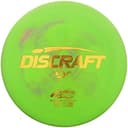
Discraft Zone
Pros
- Extremely reliable overstable flight in any conditions
- Excellent for forehand approaches
- Flat top gives a comfortable and consistent grip
- Available in many premium plastics
Cons
- Too overstable for longer straight approaches
- Not a putting putter - it is built for upshots and approaches
- Strong fade can be too much for players with slower arm speeds
The Zone is one of the most popular approach discs in professional disc golf for good reason. It is torque-resistant, dead reliable in wind, and feels great for both backhand and forehand approaches. That 0 turn and 3 fade means it always finishes left (RHBH) - you never have to worry about it flipping on you. If you play disc golf regularly and do not carry a Zone or something similar, you are making the game harder than it needs to be.
Innova Champion Firebird

Pros
- Bomb-proof overstability that holds up in any wind
- Champion plastic maintains its stability for a long time
- One of the most trusted utility discs in the sport
- Great for forehand drives and flex shots
Cons
- Very little glide means limited max distance
- Too overstable for newer players to throw on a straight line
- Can be meat-hooky if you do not have the arm speed to push it out
The Firebird is the gold standard for overstable fairway drivers. With 0 turn and 4 fade, this disc dumps left aggressively and predictably. It is the disc you throw into a 25 mph headwind when everything else is getting pushed around. It is the disc you spike hyzer around a dogleg. It is the disc you forehand when you need a guaranteed fade. Every serious disc golfer should own a Firebird or something in that slot.
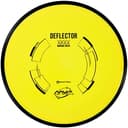
MVP Neutron Deflector
Pros
- The most overstable midrange available
- Handles headwinds that would flip most midranges
- Reliable forehand midrange with excellent torque resistance
- GYRO technology gives a unique stable flight
Cons
- Too overstable for general midrange duties
- Very low glide limits distance on calm days
- Niche disc that sits in the bag for specific situations
If the Zone is not quite enough disc for the distance you need and the Firebird is too much, the Deflector fills that gap. This is an extremely overstable midrange - arguably the most overstable midrange on the market. With 0 turn and 4 fade, it handles headwinds, fights through power, and always finishes hard left. It is a specialty disc, not an everyday midrange, but when you need it, nothing else does the job.
What Understable Discs Do
Flight Path of an Understable Disc (RHBH Perspective)
When you throw an understable disc flat with a RHBH throw:
- The disc leaves your hand and immediately begins turning right
- It holds that rightward drift through the high-speed portion of the flight
- As it slows, it fades gently back left and lands
The flight path looks like a gentle S-curve - right, then back left. The more understable the disc, the more dramatic the rightward turn. Very understable discs thrown with too much power will flip completely over and keep turning right until they hit the ground (called "turning and burning").
For LHBH throwers, reverse everything: understable discs turn left first, then fade right.
When to Throw Understable
Understable discs unlock an entirely different set of shot shapes:
- Turnover shots. When you need the disc to move right (RHBH), an understable disc thrown flat or on a slight anhyzer will drift right the entire flight. This is how you shape around obstacles on the right side.
- Hyzer flips. Throw an understable disc on a hyzer angle and it will flip up to flat, fly straight for a long time, and then gently fade at the end. This produces some of the longest, straightest flights in disc golf and is a critical technique for distance.
- Tailwinds. Wind from behind makes discs act more overstable. An understable disc in a tailwind flies like a neutral disc in calm air - long and straight. Smart disc selection.
- Rollers. Extreme understable discs make great roller discs. Thrown on anhyzer with enough power, they hit the ground on their edge and roll for massive distance.
- Lower arm speeds. If you are a beginner or have a slower arm speed, understable discs will fly straighter and farther for you than overstable or neutral discs. This is because you are not generating enough speed to activate the full turn of the disc, so an understable disc for you flies more like a neutral disc for a faster arm. Check out our guide to understable disc golf discs for more picks.
Best Understable Discs by Category
Here are three understable discs covering fairway driver, midrange, and distance driver slots.
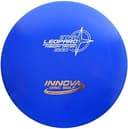
Innova Star Leopard
Pros
- Perfect for learning disc golf fundamentals
- Excellent glide produces surprising distance with less effort
- Versatile enough for turnovers, hyzer flips, and straight shots
- Star plastic lasts well and holds its understable characteristics
Cons
- Experienced players with fast arms will turn it over easily
- Not a disc you can power through headwinds
- Gets more understable as it beats in, eventually becoming flippy
The Leopard is one of the greatest beginner discs ever made, and it remains useful long after you stop being a beginner. With -2 turn and only 1 fade, it flies straight to slightly right for most arm speeds and teaches you how to shape shots. Advanced players use it for hyzer flip tunnel shots where they need laser-straight lines at fairway driver speed. If you are building your first bag, the Leopard should be in it.
Discraft ESP Meteor
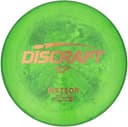
Discraft ESP Meteor
Turnover midrange shots, anhyzer lines, beginners needing a straight-flying mid
Pros
- One of the best understable midranges on the market
- High glide produces easy distance
- Excellent for turnover and anhyzer lines
- ESP plastic offers good durability and great feel
Cons
- Too flippy for high-power throwers unless thrown on hyzer
- Not usable in headwinds - it will turn and burn
- Newer players may outgrow it as arm speed develops
The Meteor is a wonderfully understable midrange that excels at turnover shots and anhyzer lines. With -3 turn and 1 fade, it flips and holds right beautifully. For slower arm speeds, it flies straight with great glide. For faster arms, it is a dedicated turnover midrange that shapes lines your overstable mids simply cannot. The high glide rating of 5 means it carries well and produces distance without requiring much effort.
Innova Champion Roadrunner

Innova Champion Roadrunner
Hyzer flip distance lines, rollers, tailwind drives, players developing arm speed
Pros
- Hyzer flip potential produces some of the longest straight flights you will throw
- One of the best roller discs available
- Champion plastic ensures it stays understable but does not become a floppy mess
- Accessible speed that intermediate players can handle
Cons
- Too understable for headwinds - do not even try
- Power throwers will flip it over immediately without hyzer compensation
- Requires good angle control to maximize its potential
The Roadrunner is an understable distance driver that is far more useful than people give it credit for. At -4 turn, it flips easily, which makes it incredible for hyzer flip drives that fly dead straight for 300+ feet. It is also one of the best roller discs in the game. For newer players, the Roadrunner in Champion plastic provides distance driver speeds without the hard fade that makes most 9-speed discs frustrating for developing arms.
Stable vs Overstable vs Understable: Where Neutral Fits
A lot of new players get hung up on the third category: "stable." Here is the simple way to lock it in.
Stable vs overstable. A stable disc flies mostly straight and finishes left with a gentle fade. An overstable disc fights left from early in the flight and finishes hard left. The difference is when and how aggressively the disc moves. Stable says "I will get there with a small hook." Overstable says "I am turning left now whether you like it or not."
Stable vs understable. A stable disc resists turning right at high speed. An understable disc gives in to it - the disc tilts right and drifts that direction before recovering. The difference is whether the disc holds your release angle or actively departs from it.
Between overstable and understable sits the sweet spot: neutral or stable discs. These fly straight when thrown flat, with minimal turn and a gentle, predictable fade at the end. Neutral discs are the backbone of most players' bags because they do exactly what you tell them to - throw them flat and they go straight, throw them on hyzer and they hold the hyzer, throw them on anhyzer and they hold the angle before gently fading back.
Here are two discs that define neutral stability.
Discraft ESP Buzzz
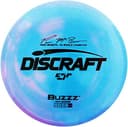
Discraft ESP Buzzz
Straight midrange shots, all skill levels, the most versatile midrange in disc golf
Pros
- Nearly perfectly neutral - goes where you aim
- Trusted by beginners and touring professionals alike
- Available in virtually every Discraft plastic
- The benchmark midrange that all others are compared to
Cons
- Slight turn of -1 means it is not ideal for strong headwinds
- Does not have the extreme utility of overstable or understable specialty mids
- So popular that it can be hard to find in preferred plastics and colors
The Buzzz is the best-selling midrange in disc golf history, and for good reason. At 5/4/-1/1, it is almost perfectly neutral. It goes where you throw it. Need it straight? Throw it flat. Need it to turn? Put it on anhyzer. Need it to fade? Put it on hyzer. The Buzzz does what you ask and nothing more. It is the disc equivalent of a well-calibrated tool. If you carry one midrange, this is the one.
Innova Champion TeeBird
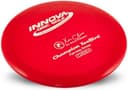
Innova Champion TeeBird
Straight fairway drives, reliable lines, one of the best all-around fairway drivers
Pros
- Reliable straight flight with predictable fade
- Handles moderate wind without turning over
- One of the longest-running and most trusted fairway drivers ever made
- Champion plastic gives excellent durability
Cons
- The 2 fade means it is not perfectly straight - it always finishes left (RHBH)
- Not understable enough for easy turnovers
- Newer players with slow arm speeds may find it fades too early
The TeeBird is to fairway drivers what the Buzzz is to midranges - the gold standard for straight, reliable flights. With 0 turn and 2 fade, it flies straight with a gentle finish left. It handles moderate wind without flipping and shapes beautiful tunnel shots. The TeeBird has been in production since the early 2000s and remains one of the most popular discs in the sport because it simply works. If you want one fairway driver that does everything, start here.
How Stability Changes Over Time (Beat-In Effect)
Here is something that catches many new players off guard: disc stability is not permanent. Every time your disc hits a tree, skips off concrete, or crashes into the ground, the plastic warps slightly. Over time, this wear - called "beating in" - makes every disc less overstable.
A brand new Champion Firebird is a meat hook. A Firebird you have thrown for two years and smacked into hundreds of trees will fly noticeably straighter, with less aggressive fade. Some players intentionally beat in overstable discs to create a "seasoned" version that flies straighter than a new one.
This works in reverse too. An understable disc that is already flippy becomes even more understable as it beats in. That Roadrunner that was perfect for hyzer flips six months ago might now roll every time you throw it.
Premium plastics (Champion, ESP, Z, Neutron) resist beating in and hold their stability longer. Base plastics (DX, Pro-D, Baseline) beat in much faster. This is why you often see players carry the same disc in multiple plastics - a new Star Leopard flies differently from a two-year-old DX Leopard, even though they are technically the same mold.
The practical takeaway: your bag's stability spectrum shifts over time. Pay attention to how your discs fly, not just what the flight numbers say. That overstable disc you bought to fight the wind might not fight it as hard after a year of use.
Stability and Arm Speed: Why It Matters
This is the single most misunderstood aspect of disc stability. The flight numbers printed on a disc assume a specific arm speed - roughly the power of an intermediate-to-advanced player. If your arm speed is slower than that baseline, every disc flies more overstable than its numbers suggest. If your arm speed is faster, every disc flies more understable.
This means:
- Beginners throwing a "neutral" disc like the Buzzz (5/4/-1/1) will see more fade and less turn than the numbers suggest. The disc flies overstable for them. An understable disc like the Leopard (-2 turn) might fly neutral for a beginner - which is exactly why understable discs are recommended for new players.
- Advanced players throwing the same Buzzz will activate more of the turn and see a straighter or even slightly understable flight. A Leopard in their hands will turn hard right unless they compensate with a hyzer release.
This is why advice like "just throw understable discs" is too simple. The right stability depends on your arm speed, the wind conditions, and the shot shape you need. The goal is not to throw the most overstable or understable discs. The goal is to carry a range of stabilities so you have the right tool for every situation.
A good starting approach: throw a disc you know well on a calm day and watch what it does. If your "neutral" disc fades hard left without much straight flight, you need more understable options. If your "understable" disc flips over and crashes right, you need more neutral or overstable options - or you need to work on your release angle.
Overstable vs Understable for Forehand Throws
Forehands change the stability conversation. A forehand release puts different spin on the disc than a backhand, and the wobble it imparts makes most discs act more understable than their numbers suggest. Throw a neutral disc on a forehand and it will often turn over and never come back - the disc you trust on a backhand can betray you on a forehand.
The fix is simple: when you forehand, lean overstable. A disc that would be too overstable for your backhand is often perfect for your forehand. The Discraft Zone, Innova Firebird, and MVP Deflector listed earlier are all forehand workhorses for exactly this reason. They have the torque resistance to absorb the spin difference and still fly the line you want.
A practical rule of thumb: pick a disc one stability level more overstable than what you would throw backhand for the same shot. If your go-to backhand approach is a Buzzz, your go-to forehand approach is a Zone. If your go-to backhand fairway is a TeeBird, your go-to forehand fairway is a Firebird. As your forehand spin gets cleaner, you can dial back toward neutral - but until then, overstable is the safe call.
Understable discs on forehand are usually a mistake. They flip immediately, turn into rollers, or crash right into the woods. The exception is intentional roller shots, where you actually want the flip. For straight or controlled forehand lines, stay overstable.
Common Stability Mistakes
Mistake 1: Throwing Too Overstable Too Early
This is the most common mistake in disc golf. New players see professional players throwing overstable discs and assume they should too. But pros have 400+ foot arms that can push through the overstability. A beginner throwing a Firebird is watching that disc fly 150 feet and dump hard left into the woods.
If most of your drives finish hard left (RHBH) and you are not getting the distance you want, your discs are probably too overstable for your arm speed. Step down to more neutral or understable options and watch your distance jump immediately.
Mistake 2: Confusing Stability With Quality
Overstable does not mean "better." Understable does not mean "worse." Some players think upgrading means moving to more overstable discs, as if understable discs are training wheels. That is wrong. Professional players carry understable discs in their tournament bags because certain shots demand them. A hyzer flip with a Roadrunner is not a beginner move - it is an advanced technique that happens to use an understable disc.
Mistake 3: Not Understanding the Hyzer/Anhyzer Relationship
Stability and release angle work together. You can make an overstable disc fly straight by releasing it on anhyzer (tilted right for RHBH). You can make an understable disc fly straight by releasing it on hyzer (tilted left for RHBH). Understanding this relationship is what separates a player who throws one shot shape from a player who can shape any line on the course.
The practical version: if a hole requires a straight shot and all you have is an overstable midrange, release it on a slight anhyzer and let the fade bring it back to straight. If all you have is an understable midrange, release it on a slight hyzer and let the turn bring it up to flat. Matching stability to release angle is how you expand your shot repertoire without buying more discs.
Mistake 4: Ignoring Wind When Choosing Stability
Wind changes effective stability. A headwind makes your disc act more understable - that neutral disc might flip over in a 20 mph headwind. A tailwind makes your disc act more overstable - that understable disc might fly dead straight in a tailwind.
The rule of thumb: throw one level more overstable than normal into a headwind, and one level more understable than normal with a tailwind. If you normally throw a Buzzz on a calm day, reach for the Zone in a headwind and the Meteor in a tailwind.
Frequently Asked Questions
What does overstable mean in disc golf?
Overstable means the disc resists turning right at high speed and finishes with a strong leftward fade (for a right-hand backhand thrower). Throw it flat and it will hold the line briefly, then hook left. The more overstable the disc, the earlier and harder that left finish kicks in. Overstable discs are the go-to for headwinds, forehand throws, and any shot where you need a guaranteed left finish.
What does understable mean in disc golf?
Understable means the disc tilts right during the high-speed portion of the flight before fading back left at the end (for a right-hand backhand thrower). The result is an S-shaped flight path. Understable discs are great for turnover shots, hyzer flips, rollers, and giving newer players easier distance because the disc actually uses its full flight path instead of fading early.
Are overstable discs better than understable discs?
Neither is "better" - they are different tools for different shots. Overstable discs are bulletproof in wind and on forehands, but they sacrifice distance because they fight their own forward momentum. Understable discs produce easier distance and unlock turnovers and hyzer flips, but they get pushed around in headwinds. A balanced bag has both.
How can I tell if a disc is overstable or understable without throwing it?
Look at the third and fourth flight numbers. A disc with 0 or +1 turn and 3+ fade is overstable. A disc with -2 or more negative turn and low fade is understable. You can also feel it: overstable discs tend to have flatter tops and sharper rims, while understable discs are domier with rounder rims. The truest test is throwing it - flight numbers are guidelines, not gospel.
Does plastic type change a disc's stability?
Yes. Premium plastics like Champion, Z, and Star fly more overstable out of the box and hold their stability for hundreds of rounds. Base plastics like DX, Pro-D, and Baseline beat in faster and become more understable over time. The same mold in two different plastics can fly noticeably differently. If you want a disc to stay stable, buy premium. If you want it to break in fast, go base.
What is the most overstable disc in disc golf?
In the major brands, the Innova Firebird (9/3/0/4) and MVP Deflector (5/3.5/0/4) are the benchmark overstable discs in their categories. Even more overstable options exist - Innova Pig, Discraft Zone XL, MVP Reactor - but the Firebird is the most widely used overstable utility disc in competitive play.
What is the most understable disc?
For mainstream picks, the Innova Roadrunner (9/5/-4/1) and Discraft Meteor (5/5/-3/1) sit at the understable end of their speed classes. Even more understable options like the Innova Mamba (11/6/-5/1) exist for dedicated turnover and roller use. The "most understable" depends on the speed class and what shot shape you need.
Final Thoughts
Understanding overstable vs understable is not just vocabulary - it is the foundation of shot selection in disc golf. Once you internalize what stability means, you stop guessing and start choosing. You look at a hole, assess the wind, visualize the line, and pick the disc with the right stability to get you there.
The quick version one more time: overstable fades left (RHBH), understable turns right (RHBH), and neutral goes mostly straight. Flight numbers - specifically turn and fade - tell you where a disc falls on that spectrum. Your arm speed, the wind, and the disc's wear all shift that spectrum.
Build your bag with a range of stabilities. Carry something overstable for headwinds and forehand shots. Carry something understable for turnovers and hyzer flips. Carry something neutral for your bread-and-butter straight shots. Do that in each category - putter, midrange, fairway driver - and you will have the tools for every shot on the course.
For more on choosing the right discs, check out our guides on disc golf discs for beginners and the best disc golf discs for every skill level.
Affiliate Disclosure
This post contains affiliate links. As an Amazon Associate, Pine Tree Disc earns from qualifying purchases at no additional cost to you. Learn more