MVP Plastic Types Explained: Neutron, Proton, Plasma, Fission

Quick Comparison
| Product | Speed↑ | Glide↑ | Turn↑ | Fade↑ | Best For | Price |
|---|---|---|---|---|---|---|
| 11 | 5 | -1 | 2.5 | Players who want a durable, high-speed distance driver that holds its flight for years | Check Price | |
| 8 | 5 | -0.5 | 2 | Players who want a translucent premium plastic with extra grip for control shots | Check Price | |
| 9 | 5 | -1 | 2 | Players who want maximum grip and a premium disc with a distinctive metallic look | Check Price | |
| 5 | 5 | -0.5 | 1.5 | Players who want a midrange in a lighter weight without losing premium durability | Check Price | |
| 3 | 3 | -0.5 | 0 | Players who want a soft, grippy putter that lands dead and stays under the basket | Check Price |


Players who want a durable, high-speed distance driver that holds its flight for years
Check Price on AmazonPlayers who want a translucent premium plastic with extra grip for control shots
Check Price on AmazonPlayers who want maximum grip and a premium disc with a distinctive metallic look
Check Price on AmazonPlayers who want a midrange in a lighter weight without losing premium durability
Check Price on AmazonPlayers who want a soft, grippy putter that lands dead and stays under the basket
Check Price on AmazonHere is the short version. If you are standing in a pro shop trying to decode MVP's plastic names, this is what they mean: Neutron is the durable everyday premium standard, Proton is a grippier premium blend, Plasma is the grippy semi-gummy premium plastic with a metallic sheen, Fission uses microbubble technology for ultralight discs, and Electron is the soft putter plastic. Eclipse is the glow line. That is the whole map.
MVP plastic types confuse more beginners than almost any other brand's lineup, and it is not your fault. Most disc companies name plastics by quality tier - base, mid, premium - and you can rank them in your head. MVP names them after physics concepts, and the names tell you nothing about price or feel until someone explains them. Worse, the same disc mold shows up in five or six different plastics, so the "Volt" you saw online and the "Volt" in the shop can fly slightly differently and cost different amounts.
This guide fixes that. We will explain what plastic actually changes about a disc, then walk through each MVP plastic type with a representative disc so you can feel the difference. One thing to know up front: every MVP disc uses a GYRO overmold, a two-part construction with a dense outer rim ring and a lighter inner core poured together. When MVP names a plastic, that name refers to the core or the overall blend, not just the rim. Keep that in mind as you read.
What Plastic Actually Changes About a Disc
Before the plastic-by-plastic breakdown, you need to understand what plastic does and does not do. This is the part that saves you money.
Plastic does not change a disc's fundamental design. A Photon is a fast, stable distance driver in every plastic MVP makes. The mold - the shape of the disc - sets the speed, the rim width, and the basic flight personality. Plastic changes three things on top of that mold:
Durability. Premium plastics resist damage from hitting trees and pavement. A disc that holds its shape holds its flight numbers. Base or softer plastics ding up faster, and every ding nudges the disc toward more understable flight (more turn, less fade).
Grip. Some plastics are slick and firm, others are tacky and a little gummy. Grip matters most in cold or wet conditions and on power shots where the disc has to stay locked in your hand until release. Grippier plastic is more forgiving of a sloppy grip.
How flight shifts with wear. This is the one beginners miss. No disc flies the same forever. As plastic wears, the disc becomes more understable - it turns more and fades less. Durable plastic delays that shift for years. Softer plastic speeds it up, which some players actually want because a beat-in disc can be easier to throw straight. The plastic you pick determines how fast your disc "season" into a new flight.
If you want a deeper primer on what turn and fade mean, read our disc golf numbers explained guide, and our breakdown of overstable vs understable disc golf discs covers how wear changes stability over time.
One more note. MVP is the sister brand of Axiom and Streamline, and all three share these plastics. If you learn MVP's plastic types, you have basically learned Axiom's too. If you are coming from Innova, our Innova plastic types explained guide maps that brand's lineup the same way.
Neutron: The Durable Everyday Premium Standard
MVP Neutron Photon
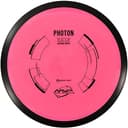
MVP Disc Sports Neutron Photon Disc Golf Distance Driver
Players who want a durable, high-speed distance driver that holds its flight for years
Pros
- Durable enough to hold flight numbers for years
- Solid, reliable grip in most conditions
- The most widely available MVP plastic, so easy to find any mold
- Good value for a premium plastic
Cons
- Grip is good but not the grippiest MVP offers
- Opaque colors only (Cosmic Neutron covers the translucent crowd)
- Firm feel is less comfortable for touch putting
Neutron is the plastic to learn first because it is MVP's baseline premium blend and the one you will see most often. It is firm, opaque, durable, and offers solid grip without being sticky. If a friend hands you an MVP disc and you do not know what plastic it is, Neutron is the safe guess.
The Neutron Photon is a great showcase. The Photon is a fast, stable-to-overstable distance driver, and Neutron gives it the durability to keep those numbers through hundreds of rounds. Throw it into a tree at full power and it shrugs it off. That durability is the whole point: a Neutron disc you buy today will fly roughly the same a year from now, which makes it easy to trust. For a slower, more beginner-friendly mold in the same family, see our MVP Wave review.
Worth knowing: MVP also makes Cosmic Neutron, which is Neutron plastic with a translucent, see-through finish and swirled colors. It flies essentially identical to standard Neutron - the "Cosmic" label is about looks, not performance. If you like the translucent aesthetic, Cosmic Neutron is a fair pick at a similar price.
Proton: The Grippier Premium Blend
MVP Proton Volt
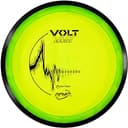
MVP Disc Sports Proton Volt Fairway Driver
Players who want a translucent premium plastic with extra grip for control shots
Pros
- Grippier than Neutron, more forgiving on control shots
- Translucent, attractive finish
- Still durable enough for premium-tier longevity
- Priced the same as Neutron
Cons
- Slightly less durable than Neutron over the very long haul
- Grip can feel slick once the disc gets dirty
- Translucent dye can show wear and scuffs more visibly
Proton is Neutron's grippier cousin. It is a premium blend that comes in a translucent, jewel-toned finish, and the surface has a touch more tackiness than Neutron. The durability is still strong - Proton holds up well over time - but the standout feature is hand feel. It locks into your grip a little more confidently, which is why a lot of players reach for Proton on fairway drivers and control shots where a clean release matters.
The Proton Volt is the right disc to feel this difference. The Volt is a versatile, slightly stable fairway driver, the kind of disc you throw when you need an accurate placement shot rather than max distance. That control-shot role pairs naturally with Proton's grippier surface. You get the durability of a premium plastic with a hand feel that rewards precise throwing.
If you are choosing between Neutron and Proton on the same mold, think about what you want. Neutron is the slightly more durable, slightly slicker workhorse. Proton trades a hair of that durability for better grip and a nicer translucent look. For most players it is a feel preference, not a performance gap.
Plasma: The Grippy Semi-Gummy Premium Plastic
MVP Plasma Tesla
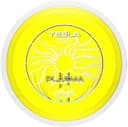
MVP Disc Sports Plasma Tesla Disc Golf Distance Driver
Players who want maximum grip and a premium disc with a distinctive metallic look
Pros
- The grippiest, most secure feeling plastic MVP makes
- Distinctive metallic sheen looks premium
- Excellent in cold and wet conditions
- Still durable enough for years of normal play
Cons
- Most expensive standard MVP plastic
- Slightly softer than Neutron, so it can beat in a bit faster
- The semi-gummy surface attracts dirt
Plasma is MVP's premium showpiece plastic. It is a grippy, semi-gummy blend with a metallic sheen baked into the rim, so the disc looks like it has a shimmering metal flake finish. It is the most eye-catching plastic MVP makes, and it is usually the priciest. But Plasma is not just looks - the semi-gummy surface delivers the best grip in the lineup, which is genuinely useful in cold weather and rain when slick plastic gets hard to hold.
The Plasma Tesla shows why this matters. The Tesla is a stable, controllable speed-9 driver, slightly more stable and powerful than the Volt above it. Plasma's tacky grip helps you keep a fast disc locked in until release, which is exactly when grip failures cost you. Pull a fast driver with a slippery disc on a cold morning and you get early releases and ugly results. Plasma fixes that.
The trade-off is durability and price. Plasma is a touch softer than Neutron, so it can beat in slightly faster on heavy tree contact, and it costs a few dollars more. For most players Plasma is a treat-yourself plastic: pick it for a favorite mold you throw constantly, or for a disc you want to look great in your bag.
Fission: Microbubble Tech for Ultralight Discs
MVP Fission Reactor

MVP Disc Sports Fission Reactor Disc Golf Midrange
Players who want a midrange in a lighter weight without losing premium durability
Pros
- Ultralight weights are easier to throw far for lower arm speeds
- Rim-weighted feel adds stability and glide
- Premium durability despite the light weight
- Great option for kids, beginners, and seniors
Cons
- Lighter discs are more affected by wind
- Fewer weight and color options than Neutron
- Usually a few dollars more than base-tier plastic
Fission is the most technically interesting plastic in MVP's lineup. It uses microbubble technology - tiny gas bubbles introduced into the core during molding - which makes the core significantly lighter without changing the disc's outer dimensions. The result is an ultralight disc where most of the remaining weight sits out on the GYRO rim ring.
Why does that matter? Two reasons. First, it lets MVP make discs in lighter weights that still feel and fly like full-size premium discs, not flimsy lightweight discs. A lighter disc is easier to throw far for players with less arm speed - kids, beginners, seniors, and anyone working on form. Second, concentrating weight on the rim gives the disc more gyroscopic stability and glide, so a Fission disc tends to feel floaty and stable for its weight.
The Fission Reactor is a smart way to try it. The Reactor is an easy, neutral-to-stable midrange - one of the friendliest control discs MVP makes. In Fission plastic at a lighter weight, it becomes even more accessible for a developing player while keeping premium durability. If your distance is limited by arm speed rather than technique, a Fission disc can add real distance simply by being lighter. Just be aware that very light discs get pushed around more by wind, so Fission shines most on calm days.
Electron: The Soft Putter Plastic
MVP Electron Atom
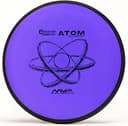
MVP Disc Sports Electron Atom Disc Golf Putter
Players who want a soft, grippy putter that lands dead and stays under the basket
Pros
- Soft, grippy feel that is comfortable for putting
- Lands dead with minimal skip or roll-away
- Available in Soft, Medium, and Firm to match your preference
- Inexpensive, the cheapest MVP plastic
Cons
- Wears faster than driver plastics
- Soft versions can feel too floppy for some hands
- Slowly becomes more understable as it beats in
Electron is MVP's putter plastic, and it follows a different logic than the driver plastics above. For putters you usually do not want maximum durability - you want a soft, grippy disc that feels good off your fingertips and, critically, does not skip or roll away when it hits the chains or the ground. Electron delivers exactly that. It is a soft, slightly flexible plastic with a comfortable tacky grip.
MVP makes Electron in three firmnesses - Soft, Medium (sometimes called standard Electron), and Firm. Soft is the grippiest and lands the deadest, which most players prefer for putting inside the circle. Firm holds its shape better and is steadier in wind, so some players use Firm for longer approach shots. If you are buying your first MVP putter, Medium or Soft Electron is the standard recommendation.
The Electron Atom is the natural showcase. The Atom is a beginner-friendly, neutral putter that flies straight with a gentle, predictable finish, and Electron's soft grip makes it comfortable to throw and putt all round. The trade-off, as with any soft putter plastic, is durability - Electron scuffs and wears faster than a driver plastic, and the disc will slowly become more understable. For a putter, that is usually fine. Many players grow to like a worn-in putter, and putters take far less abuse than drivers anyway.
Which of the MVP Plastic Types Should You Buy?
Now that you know what each plastic does, here is how to match it to the kind of player you are.
You are a beginner on a budget. Start with Neutron for your drivers and midranges. It is the durable everyday standard, it is reasonably priced, and it holds its flight long enough that you can actually learn what a disc does before it changes on you. For your putter, grab an Electron Atom in Medium or Soft. This two-plastic combination covers a complete starter setup.
You are a beginner who struggles with distance. Look at Fission. If your throws come up short because of arm speed rather than bad technique, a lighter Fission disc can add distance immediately. A Fission midrange or fairway driver in a lighter weight is genuinely easier to get out there. The same goes for kids and seniors.
You want the best grip, especially in bad weather. Buy Plasma for the molds you throw most. It is the grippiest plastic MVP makes and it is the one that saves your round on cold, wet mornings. It costs a bit more, so treat it as an upgrade for favorite discs rather than your whole bag.
You like a translucent look and a slightly grippier feel than Neutron. Proton is your pick. It performs almost identically to Neutron with a touch more grip and a much nicer translucent finish, at the same price.
You play in low light or want glow discs. Look for Eclipse, MVP's glow-in-the-dark line. Eclipse discs charge under light and glow for night rounds, and they come in versions blended with the premium plastics. Eclipse is a feature, not a separate quality tier.
You only care about one disc lasting forever. Neutron. Of the standard plastics, Neutron is the most durable and the slowest to change. A Neutron disc is the closest thing to a buy-it-once disc.
A simple all-around bag: Neutron for drivers and midranges, Plasma for a couple of favorites you throw hard, and Electron for your putter. That covers durability, grip, and feel without overthinking it.
Frequently Asked Questions
Is Neutron or Proton better?
Neither is strictly better - they are very close. Neutron is slightly more durable and a bit slicker. Proton is slightly grippier and comes in a translucent finish. They cost the same. Pick Proton if grip and looks matter to you, Neutron if you want maximum longevity.
What is the most durable MVP plastic?
Among the standard plastics, Neutron is the most durable and the slowest to lose its original flight numbers. Proton is close behind. Plasma is durable but a touch softer. Electron, the putter plastic, is the least durable by design because putters benefit from a softer feel.
Does the plastic change how a disc flies?
Not at first. A new disc flies according to its mold regardless of plastic. But plastic controls how fast the disc changes with wear. A disc in durable Neutron holds its flight for years, while the same disc in a softer plastic will turn more and fade less sooner. Same disc, different timeline.
What is the difference between Neutron and Cosmic Neutron?
Cosmic Neutron is the same Neutron plastic with a translucent, see-through finish and swirled colors. It flies essentially the same as standard opaque Neutron. The "Cosmic" label is about appearance, not performance.
What is Eclipse plastic?
Eclipse is MVP's glow-in-the-dark line. Eclipse discs charge under light and glow for night rounds. It is a glow feature blended into premium plastic, not a separate durability or quality tier.
Which MVP plastic is best for putters?
Electron, which is made specifically for putters. It is soft and grippy and lands dead without skipping. It comes in Soft, Medium, and Firm - Soft or Medium for putting inside the circle, Firm if you want a steadier disc for longer approaches.
Why are MVP discs heavier on the rim?
That is the GYRO overmold, MVP's signature construction. Every MVP disc is molded in two parts: a dense outer rim ring and a lighter inner core. Concentrating weight on the rim adds gyroscopic stability, which is why MVP discs are known for a stable, consistent feel. The plastic name refers to the core or overall blend used in that construction.
Final Thoughts
MVP's plastic names look intimidating, but the system is simple once it clicks. Neutron is your durable everyday standard. Proton is the grippier, translucent version at the same price. Plasma is the premium grip-and-looks upgrade for favorite discs. Fission uses microbubble technology to make ultralight discs that are easier to throw far. Electron is the soft, comfortable putter plastic. Eclipse glows.
If you remember nothing else: start with Neutron for drivers and midranges and Electron for your putter. That is a complete, durable, affordable MVP setup. Upgrade individual discs to Plasma or Proton as you find molds you love, and reach for Fission if a lighter disc would help your game. Once you stop guessing what the plastic names mean, you can focus on the part that actually matters - picking the right mold and learning to throw it well.
Affiliate Disclosure
This post contains affiliate links. As an Amazon Associate, Pine Tree Disc earns from qualifying purchases at no additional cost to you. Learn more
Isaac "Steaks" Salisbury is the Maine native who founded Pine Tree Disc Golf. He's been throwing plastic through Maine's forests and fairways for years and started Pine Tree to build disc golf gear and content that players can wear and trust on and off the course.
Learn more about Pine Tree Disc →