The History of Disc Golf: When Was It Invented?

Disc golf has grown from a quirky pastime to one of the fastest-growing sports in America. But where did it come from? The history of disc golf is a fascinating story of innovation, persistence, and one man's vision to create a new sport.
The Short Answer
Disc golf was formalized in 1975 when "Steady" Ed Headrick installed the first permanent disc golf course and invented the Disc Pole Hole (the chain basket target). However, people had been throwing discs at targets informally since the 1960s.
Before Disc Golf: The Flying Disc
You can't have disc golf without discs. The story begins with the Frisbee itself.
- 1871: Yale students reportedly threw pie tins from the Frisbie Pie Company
- 1948: Walter Frederick Morrison creates the first plastic flying disc
- 1957: Wham-O buys Morrison's design and names it "Frisbee"
- 1964: Ed Headrick joins Wham-O and redesigns the Frisbee with raised ridges for better flight
- 1966: Headrick patents the modern Frisbee design (U.S. Patent #3359678)
"Steady" Ed Headrick: Father of Disc Golf
Ed Headrick (1924-2002) is universally recognized as the father of disc golf. His contributions to the sport are unmatched.
While working at Wham-O, Headrick and his colleagues would throw Frisbees at trash cans during lunch breaks. He developed informal "object courses" with friends, challenging each other to hit trees, signs, and targets. Sometimes they snuck onto golf courses at night to play rounds with discs.
His accuracy earned him the nickname "Steady Ed" - a name that would become legendary in disc golf circles.
Key Timeline
1960s: The Birth of an Idea
Multiple groups across the country started playing informal disc golf independently. Students at Rice University held tournaments with trees as targets as early as 1964. But there was no standardization - people threw at trees, trash cans, posts, and anything else convenient.
1969: First Official Tournament
Ed Headrick organized the first recognized disc golf tournament at Brookside Park in Pasadena, California. The "holes" were objects marked with ribbons. This event planted the seed for organized disc golf.
1975: The Sport Takes Shape
This was the pivotal year for disc golf:
- Ed Headrick leaves Wham-O to focus entirely on disc golf
- He coins and trademarks the term "Disc Golf"
- First permanent disc golf course installed at Oak Grove Park, Pasadena
- Headrick invents the Disc Pole Hole - the chain basket target (U.S. Patent #4039189)
The chain basket was revolutionary. Before this, disc golf targets were posts cemented into the ground. The chains provided a mechanism to catch and stop discs consistently, making the sport more standardized and enjoyable.
1976: Formal Organization
Headrick founded two crucial organizations:
- Disc Golf Association (DGA): To manufacture discs and targets
- Professional Disc Golf Association (PDGA): To establish rules and standards
These organizations transformed disc golf from a casual activity into a legitimate sport with standardized equipment and rules.
1982: PDGA Independence
Ed Headrick turned over control of the PDGA to players and Ted Smethers, allowing the organization to grow independently. That year, Harold Duvall won the first PDGA World Championships, held across multiple California courses.
Ed Headrick's Legacy
By the time of his death in 2002, Headrick had:
- Installed nearly 800 disc golf courses in 20 countries
- Abandoned his trademark on "Disc Golf" to benefit the sport
- Donated control of the PDGA to grow the game
In a fitting tribute, Headrick requested that his ashes be molded into discs. These memorial discs were sold to fund the Ed Headrick Memorial Museum in Augusta, Georgia.
Disc Golf Today
The sport Headrick created has exploded in popularity:
- Over 10,000 courses worldwide (2023)
- Millions of active players globally
- Professional tournaments with six-figure purses
- PDGA membership growing over 30% annually in recent years
Disc golf is now the fastest-growing sport in America, with new courses opening weekly and professional players achieving celebrity status. If you're ready to try it yourself, our how to play disc golf guide covers everything you need to get started.
Why Disc Golf Took Off
Several factors contributed to disc golf's growth:
- Low cost: Most courses are free to play
- Accessibility: Anyone can learn the basics in minutes
- Nature: Courses are often set in beautiful parks
- Community: The disc golf community is famously welcoming
- COVID-19: The pandemic drove massive growth as people sought outdoor activities
Ready to Try the Sport Headrick Built?
If reading about disc golf's history has you itching to play, you don't need much to get started. A starter set gets you on the course for under $25.
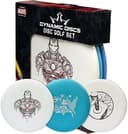
This set includes a putter, midrange, and driver - everything you need for your first round. Find a free course near you at UDisc, grab a set, and see what "Steady" Ed started. For more options, check our best beginner discs guide.
Final Thoughts
Disc golf's history is a story of one man's vision becoming a global phenomenon. From lunch-break games at Wham-O to World Championships with thousands of spectators, the sport has come incredibly far. And if "Steady" Ed Headrick's ashes flying through the air on countless memorial discs are any indication, the spirit of disc golf's founder continues to inspire players around the world.
Affiliate Disclosure
This post contains affiliate links. As an Amazon Associate, Pine Tree Disc earns from qualifying purchases at no additional cost to you. Learn more
Isaac "Steaks" Salisbury is the Maine native who founded Pine Tree Disc Golf. He's been throwing plastic through Maine's forests and fairways for years and started Pine Tree to build disc golf gear and content that players can wear and trust on and off the course.
Learn more about Pine Tree Disc →