How to Play Disc Golf: Complete Beginner's Guide

Quick Comparison
| Product | Speed↑ | Glide↑ | Turn↑ | Fade↑ | Best For | Price |
|---|---|---|---|---|---|---|
| - | - | - | - | Complete 3-disc starter kit with Judge, Truth, and Escape | Check Price | |
| 2 | 3 | 0 | 1 | Learning proper putting form with consistent flight | Check Price | |
| 5 | 4 | -1 | 1 | Straight, controllable flights at medium distances | Check Price |


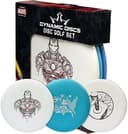
Complete 3-disc starter kit with Judge, Truth, and Escape
Check Price on Amazon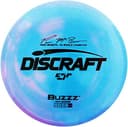
Disc golf is one of the fastest-growing sports in America, and it's easy to see why. It's affordable (most courses are free), accessible (anyone can learn in minutes), and incredibly fun. This guide covers everything you need to know to play your first round.
What is Disc Golf?
Disc golf is played like traditional golf, but instead of hitting a ball with clubs, you throw specialized flying discs toward metal basket targets. Like golf, the goal is to complete each hole in the fewest throws possible.
Most courses have 9 or 18 holes, each with a tee pad (starting area) and a basket (target). Holes range from 150 to 500+ feet, winding through parks, forests, and open fields.
Basic Rules
Teeing Off
Each hole begins with a throw from the tee pad. You must release the disc before stepping past the front of the tee pad.
Playing Your Lie
After your tee shot, mark where your disc landed (this is your "lie"). Your next throw must be made from directly behind this spot. If your disc lands in a tree, your lie is on the ground directly below it.
Completing the Hole
The hole is complete when your disc comes to rest in the basket or is suspended in the chains. Discs landing on top of the basket don't count - they must drop into the basket or chains.
Out of Bounds
If your disc lands out of bounds (usually marked with signs or lines), you take a one-stroke penalty and play from where the disc crossed the OB line, or from a designated drop zone.
Putting Rule
When putting from within 10 meters (about 33 feet) of the basket, you must maintain balance behind your lie until the disc comes to rest. No jumping or stepping past your lie while the disc is in flight.
Scoring
Scoring works just like golf:
- Each throw counts as one stroke
- Penalties add additional strokes
- Par is the expected number of strokes for a skilled player
- Lowest total score wins
Common scoring terms:
- Birdie: One stroke under par
- Par: Expected strokes for the hole
- Bogey: One stroke over par
- Ace: Completing the hole in one throw
Etiquette
Disc golf has a strong culture of courtesy. Following etiquette makes the experience better for everyone:
Safety First
- Never throw when someone is in your throwing lane
- Yell "FORE!" if your disc flies toward people
- Let faster groups play through
- Watch for park users who may not know they're on a disc golf course
Courtesy on Course
- Stay quiet while others are throwing
- Stand behind the thrower, not in their peripheral vision
- Help search for lost discs
- Don't litter - pack out what you pack in
- Don't damage trees or course property
Equipment You Need
To play your first round, you need just one thing: a disc. That's it. However, most players carry 3-20 discs of different types. Each disc has four flight numbers that describe how it flies:
Putters
Slow, accurate discs used for short throws and putting. Every player needs at least one.
Midranges
Medium-speed discs for shots between 150-300 feet. The most versatile disc type.
Drivers
Fast discs designed for maximum distance. Beginners should start with slower "fairway drivers" rather than high-speed "distance drivers."
Recommended Starter Gear
Everything you need to start playing. Includes a putter, midrange, and driver - all beginner-friendly molds.
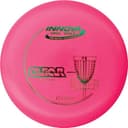
The most iconic putter - perfect for learning. A reliable putt & approach that many players use for years.
The most versatile midrange for any shot. A reliable midrange that many players use for years.
Finding a Course
Most disc golf courses are free to play and located in public parks. To find courses near you:
- UDisc app (most comprehensive, includes reviews and maps)
- PDGA.com course directory
- Google Maps (search "disc golf near me")
Courses are rated by difficulty. Look for "beginner-friendly" or shorter courses for your first rounds.
Tips for Your First Round
- Play with experienced friends if possible - they can show you the ropes
- Start with just a putter and midrange - you don't need drivers yet. See our beginner disc recommendations for specific picks.
- Focus on throwing straight, not far. Our throwing technique guide covers proper form step by step.
- Don't worry about your score - just enjoy being outside
- Let faster groups play through
- Bring water and comfortable shoes
Common Beginner Mistakes
- Buying high-speed drivers that are too fast to throw correctly. Need help choosing? Check our starter set guide.
- Throwing too hard instead of focusing on form
- Not playing from the correct lie
- Throwing when people are in the fairway
Final Thoughts
Disc golf is a sport that welcomes everyone. You don't need athletic ability, expensive equipment, or years of practice to have fun. Grab a disc, find a course, and throw. The community is friendly, the courses are beautiful, and the game is endlessly rewarding.
See you on the course!
Affiliate Disclosure
This post contains affiliate links. As an Amazon Associate, Pine Tree Disc earns from qualifying purchases at no additional cost to you. Learn more