Discraft Plastic Types Explained: ESP, Z, Titanium, and More

Quick Comparison
| Product | Speed↑ | Glide↑ | Turn↑ | Fade↑ | Best For | Price |
|---|---|---|---|---|---|---|
| 5 | 4 | -1 | 1 | Players who want disc golf's most trusted midrange in a grippy premium plastic that lasts. | Check Price | |
| 4 | 3 | 0 | 3 | Players who want a rock-solid overstable approach disc that flies the same for years. | Check Price | |
| 9 | 5 | -1 | 2 | Players who want a versatile control driver with grippy durability in one package. | Check Price | |
| 13 | 5 | -1 | 3 | Power throwers who want maximum distance and a disc that holds its flight for years. | Check Price | |
| 3 | 3 | -1 | 1 | Putt and approach throwers who want the grippiest, most controllable disc possible. | Check Price |


Players who want disc golf's most trusted midrange in a grippy premium plastic that lasts.
Check Price on AmazonPlayers who want a rock-solid overstable approach disc that flies the same for years.
Check Price on AmazonPlayers who want a versatile control driver with grippy durability in one package.
Check Price on AmazonPower throwers who want maximum distance and a disc that holds its flight for years.
Check Price on AmazonPutt and approach throwers who want the grippiest, most controllable disc possible.
Check Price on AmazonIf you have ever stood in front of a wall of Discraft discs and wondered why the same Buzzz mold costs $11 in one plastic and $20 in another, you are not alone. The mold determines the shape and the flight numbers. The plastic determines how the disc feels in your hand, how long it holds that flight, and how much you pay. Understanding Discraft plastic types is the difference between buying a disc that fits your game and buying one that just happens to be on the rack.
Here is the short version. ESP is the premium blended plastic with grippy feel and signature swirls. Z (often called Elite Z) is the durable, clear workhorse that holds its flight the longest. Big Z is a grippier, opaque cousin of Z that splits the difference on feel. Titanium (Ti) is the most durable premium blend Discraft makes. Jawbreaker is the chalky, maximum-grip rubber plastic built for putters. Pro D, sometimes written ProD, is the cheap baseline plastic for beginners and bulk practice discs.
This guide breaks down every major Discraft plastic, what each one changes about a disc, and which one you should actually buy based on your skill level and budget. If you want a refresher on what those flight numbers mean before we dig in, read our guide to disc golf numbers explained.
What Discraft Plastic Actually Changes
The plastic does not change the mold. A Buzzz is a Buzzz no matter what it is made of. But plastic changes three things that matter on the course.
Durability. Premium plastics resist dings, tree hits, and the gradual flattening that happens to any disc over hundreds of throws. A baseline-plastic disc beats in fast. A premium-plastic disc holds its original shape and flight for years. This is the single biggest reason premium plastic costs more.
Grip. Grip is how securely the disc sits in your hand at the moment of release, which directly affects your spin and accuracy. Gummy, tacky plastics grip well in cold or wet conditions. Hard, slick plastics can feel glassy in the rain but release cleanly and consistently. Some players want maximum grip on a putter and a clean, predictable release on a driver. Discraft makes plastics for both.
How flight shifts with wear. This is the part most beginners miss. Every disc gets more understable as it wears in. A disc that fades hard when new will start to turn and fly straighter after a season of tree hits and ground play. Durable premium plastic slows that process down dramatically, so the disc you bought is the disc you keep throwing. Cheaper plastic beats in fast, which some players actually want when they are hunting for a flippy, understable disc on a budget.
So when you pick a plastic, you are really answering three questions. How long do you want this disc to fly the way it flies today? How much grip do you need for your conditions? And how much are you willing to spend?
ESP Plastic
ESP is the plastic most people picture when they think of Discraft. It is the premium blended line, and it is the one with the dramatic swirled colors that make every disc look slightly different.
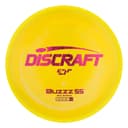
Discraft ESP Buzzz
Discraft ESP Buzzz
Players who want disc golf's most trusted midrange in a grippy premium plastic that lasts.
Pros
- Grippy, medium-soft feel that excels in most conditions
- Durable enough to resist tree hits and slow flight change
- Signature swirled colorways that are easy to identify
- Available in nearly every Discraft mold
Cons
- Less durable than Z or Titanium
- Costs more than baseline Pro D plastic
- Soft enough that hard tree hits can still ding it
The Buzzz is the most popular midrange in disc golf, and ESP is the plastic that earned it that reputation. ESP is a blended premium plastic, meaning it mixes materials to land in the middle of the durability and grip spectrum. It is durable enough to survive tree hits without beating in fast, but it keeps a slightly grippy, almost gummy surface that holds well in your hand.
ESP is also the plastic Discraft uses for its swirled and Supercolor designs, so if you have seen a Buzzz with marbled colors running through it, that is ESP. The look is not just cosmetic. The blend is what gives ESP its distinct medium-soft feel, which a lot of players prefer over the harder, glassier feel of Z.
The trade-off is that ESP is not the longest-lasting plastic Discraft makes. It will hold its flight for a long time, but a Z or Titanium version of the same mold will outlast it. For most players that is a fine compromise, because the grip and feel of ESP are genuinely better. For a deeper look at why this mold dominates bags, see our Discraft Buzzz review.
It is worth knowing that ESP has a flexible sibling called ESP FLX. FLX plastic is the same blend made gummy and bendable, so the disc flexes when you squeeze it. ESP FLX grips extremely well in cold and wet conditions and tends to fly a touch more understable than standard ESP. Putter and approach throwers love it for wet rounds. If you play a lot of winter or rainy disc golf, an ESP FLX version of your favorite mold is worth a look.
Z Plastic (Elite Z)
Z, formally Elite Z, is Discraft's flagship durable plastic and arguably the standard against which the rest of the lineup is measured. It is the clear or translucent plastic, hard and glassy to the touch, and it holds a disc's original flight longer than anything else short of Titanium.
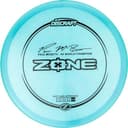
Discraft Elite Z Zone
Discraft Elite Z Zone
Players who want a rock-solid overstable approach disc that flies the same for years.
Pros
- The most durable feel-it-in-your-hand plastic short of Titanium
- Holds original flight and stability for years
- Clean, consistent release at full power
- Available across the entire Discraft lineup
Cons
- Slick grip, especially in wet or cold conditions
- Hard, glassy feel that not every player likes
- More expensive than baseline plastic
The Zone is the most popular overstable approach disc in the sport, and Z plastic is the reason it stays that way. The Zone's value comes from its absolute consistency: you throw it, it fades, it sits down. The last thing you want is a Zone that turns into a straighter, flippier disc after a season of use. Z plastic prevents exactly that.
Z is hard, durable, and translucent. It resists wear better than ESP, so an Elite Z Zone you buy today will still be hitting the same overstable line a couple of years from now. The downside of that hardness is grip. Z plastic feels slick compared to ESP, especially in the rain, and some players find it glassy in cold weather. For a driver thrown at full power that clean release is a feature. For a putter you are gripping carefully on the green, it can be a drawback, which is why putter throwers often reach for grippier plastics.
If the Zone is on your shortlist, our full Discraft Zone review covers how to use it for approaches and tournament-pressure putts.
Discraft also makes a glow-in-the-dark version of Z called CryZtal. CryZtal is Z plastic with a transparent, ultra-clear finish, and many CryZtal runs glow after light exposure. It carries the same durability as standard Z, so if you play night rounds or just want a disc that looks like ice, CryZtal gives you Z performance with a glow bonus. Z FLX is another variant, a gummier and more flexible take on Z that grips better than the standard hard version while keeping much of the durability.
Big Z Plastic
Big Z is the answer to a common complaint about Z plastic: it is durable, but it is slick and a little featureless. Big Z keeps the durability and adds grip and a better feel.
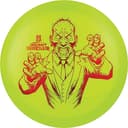
Discraft Big Z Undertaker
Discraft Big Z Undertaker
Players who want a versatile control driver with grippy durability in one package.
Pros
- Grippier and softer feel than standard Elite Z
- Nearly as durable as Z, holds flight a long time
- Opaque, bold colors are easy to find in grass
- Great middle-ground plastic for drivers
Cons
- Not offered in as many molds as ESP or Z
- Slightly less durable than full Elite Z
- Opaque finish lacks the swirl appeal of ESP
The Undertaker is a moderately overstable control driver that a lot of players treat as their go-to off the tee, and Big Z is a smart plastic choice for it. Big Z is an opaque, premium plastic that delivers most of Z's durability while feeling noticeably grippier and softer in the hand than standard Elite Z. Think of it as Z with the slickness sanded off.
Because it is opaque rather than translucent, Big Z also tends to come in solid, vivid colors instead of the clear look of Z. That makes Big Z discs easy to spot in tall grass, a small but real advantage when you are scanning a fairway for your driver.
The flight behavior sits between ESP and Z. A Big Z Undertaker will hold its stable, slightly overstable flight for a long time, beating in slower than ESP but a bit faster than rock-hard Z. For a driver you throw on every tee, that combination of grip and longevity is hard to beat. Big Z is one of the most underrated plastics in the Discraft lineup for exactly this reason.
Titanium (Ti) Plastic
Titanium, usually shortened to Ti, is the top of the Discraft durability ladder. It is the premium blend Discraft reserves for players who want a disc that essentially never beats in.
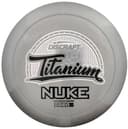
Discraft Titanium Nuke
Discraft Titanium Nuke
Power throwers who want maximum distance and a disc that holds its flight for years.
Pros
- The most durable plastic Discraft makes
- Combines Z's durability with ESP-level grip
- Holds original flight and stability for years
- Ideal for high-speed drivers that take heavy abuse
Cons
- The most expensive plastic in the Discraft lineup
- Offered in a limited selection of molds
- Overkill for casual or low-volume players
Titanium was added to the Discraft lineup in 2012, and Discraft created it to combine the durability of Z with the supreme grip of ESP. That is the whole pitch, and it is an accurate one. Ti is the most durable plastic Discraft makes, yet it does not have the slick, glassy feel that pure Z can have. It blends the best traits of the two flagship plastics into one premium material.
The Nuke is the right mold to show off Titanium. It is Discraft's premier high-speed distance driver, and high-speed drivers take the most abuse: they hit trees hardest, get thrown with the most power, and beat in the fastest in cheaper plastic. Putting a disc that fast in Titanium means it holds its stable, long-flying profile for years rather than turning into a flippy roller after a couple of seasons.
The trade-offs are price and availability. Titanium is the most expensive plastic Discraft sells, often a few dollars more than ESP or Z, and it is not offered in every mold. Discraft tends to put Ti on drivers and high-use approach discs where durability matters most. If you have a disc you love and throw constantly, paying up for the Titanium version is one of the best value moves in disc golf, because that disc will likely outlast everything else in your bag.
Jawbreaker Plastic
Jawbreaker is the outlier in the Discraft lineup, and it exists for one purpose: maximum grip on putters and approach discs.
Discraft Jawbreaker Roach
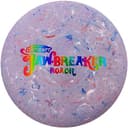
Discraft Jawbreaker Roach
Putt and approach throwers who want the grippiest, most controllable disc possible.
Pros
- The grippiest plastic Discraft makes, ideal for putting
- Chalky, tacky surface performs in cold and wet conditions
- Affordable for a premium-feel putter plastic
- Confidence-inspiring, no-slip release
Cons
- Lower durability than Z, Big Z, or Titanium
- Surface smooths and grip fades over time
- Best suited to putters, not drivers
Jawbreaker is a chalky, rubbery plastic with a matte, slightly textured surface, and it offers the most grip of any Discraft plastic. The name is a hint at the feel: it is firm but tacky, with none of the slickness of Z. When you grip a Jawbreaker disc, it does not move in your hand, which is exactly what you want when you are putting under pressure or throwing a delicate approach.
The Roach is a straight-flying putt and approach disc with extra glide, and it is a natural fit for Jawbreaker. Putting is the part of disc golf where grip matters most, because a putt is all about a clean, consistent release with no slipping. The chalky Jawbreaker surface gives you that confidence even when your hands are cold, sweaty, or wet.
The trade-off is durability. Jawbreaker is not a premium-durability plastic in the way Z or Titanium are. The matte surface will smooth out over time, and the disc will gradually feel less grippy and fly a little more understable as it wears. For a putter that mostly travels short distances and rarely smashes into trees, that is an acceptable compromise, and the price reflects it. Jawbreaker putters are among the most affordable premium-feel discs Discraft sells.
Which of the Discraft Plastic Types Should You Buy?
Now that you know what each plastic does, here is how to match it to your game and budget.
If you are a beginner on a budget, start with Pro D. Pro D, also written ProD, is Discraft's baseline plastic. It is inexpensive, has a decent grip, and beats in faster than premium plastic, which is fine when you are learning and likely to lose discs anyway. Buy your practice and field-work discs in Pro D and do not feel bad about it. A bag full of Pro D discs costs about what one Titanium driver does.
If you want the best all-around feel, buy ESP. For midranges, fairway drivers, and most of the discs you handle every round, ESP gives you the best balance of grip, durability, and that satisfying medium-soft feel. It is the plastic most intermediate and advanced players default to, and the swirled colors are a nice bonus.
If you want a disc to stay exactly the same for years, buy Z or Titanium. Overstable utility discs like the Zone are perfect in Z, because you are paying for consistency and you do not want the flight to drift. High-speed distance drivers belong in Titanium, because they take the most abuse and Ti slows wear to a crawl. Spend the extra few dollars on the discs you throw the most.
If you want a grippier durable plastic, buy Big Z. It is the smart pick for control drivers and fairway drivers when you want Z-level longevity without the slick feel. It is underrated and deserves more space in bags than it gets.
If you are buying a putter, buy Jawbreaker, ESP FLX, or Z FLX depending on feel preference. Jawbreaker for maximum chalky grip, the FLX plastics for a gummy flexible feel that also grips well in the wet. Avoid hard standard Z for putting unless you specifically like a firm, slick putter.
If you play night rounds, look for CryZtal. It gives you Z durability with a glow finish, so you get a long-lasting disc that you can also find in the dark.
The honest takeaway: you do not need to own every plastic. Most players settle on ESP for the discs they handle constantly, Z or Titanium for the one or two utility discs and high-speed drivers they want frozen in place, and a grippy putter plastic for the green. Build from there.
Frequently Asked Questions
What is the most durable Discraft plastic?
Titanium (Ti) is the most durable plastic Discraft makes. It was created in 2012 to combine the durability of Z with the supreme grip of ESP. Z plastic is a close second and is offered in far more molds, so for most durability needs Z is the practical choice and Titanium is the premium upgrade.
What is the difference between Z and Big Z?
Z, or Elite Z, is hard, translucent, and slick. Big Z is opaque, comes in bold solid colors, and feels noticeably grippier and softer in the hand. Big Z trades a small amount of Z's durability for a better grip, which makes it a great choice for drivers you throw at full power.
Is ESP or Z better for beginners?
Neither is wrong, but ESP is generally the friendlier choice for a beginner who wants one good disc, because its grippy, medium-soft feel is more forgiving and easier to release cleanly. That said, if you are buying several practice discs on a budget, baseline Pro D plastic is the most sensible starting point.
What plastic is best for disc golf putters?
Grip matters most on putters, so the best Discraft putter plastics are Jawbreaker for a chalky maximum-grip feel, and ESP FLX or Z FLX for a gummy, flexible feel that grips well in wet conditions. Hard standard Z is less popular for putting because it can feel slick.
Why does the same disc cost different prices in different plastics?
The mold is identical; only the plastic changes. Premium plastics like Titanium and ESP cost more because they are more durable and grippier than baseline Pro D. You are paying for a disc that holds its flight longer and feels better in your hand, not for a different flight.
What is Jawbreaker plastic made for?
Jawbreaker is a chalky, rubbery plastic built for maximum grip on putt and approach discs. It is firm but extremely tacky, so the disc does not slip in your hand on the green. The trade-off is that it is less durable than Z or Titanium and its grippy surface smooths out with use.
Does Discraft plastic affect how a disc flies?
The plastic does not change a disc's flight numbers, but it changes how long the disc holds that flight. Cheaper plastics beat in faster and become understable sooner, while premium plastics like Z and Titanium keep the original flight for years. So plastic affects flight over time, not flight out of the box.
Final Thoughts
Discraft plastic types are not marketing fluff. Each one solves a real problem. ESP gives you grip and a great feel for the discs you handle every round. Z and Titanium freeze a disc's flight in place for years. Big Z splits the difference with grippy durability. Jawbreaker maxes out grip for the green. Pro D keeps your practice bag cheap.
Pick the plastic that matches how hard you throw a given disc and how much you care about it staying the same. For most players that means ESP for the everyday discs, a durable plastic for the one or two utility discs you cannot afford to drift, and a grippy plastic on the putter. If you also throw Innova discs and want the same breakdown for their lineup, read our guide to Innova plastic types explained.
Buy the plastic that fits your game, not the one that happens to be on the rack.
Affiliate Disclosure
This post contains affiliate links. As an Amazon Associate, Pine Tree Disc earns from qualifying purchases at no additional cost to you. Learn more
Isaac "Steaks" Salisbury is the Maine native who founded Pine Tree Disc Golf. He's been throwing plastic through Maine's forests and fairways for years and started Pine Tree to build disc golf gear and content that players can wear and trust on and off the course.
Learn more about Pine Tree Disc →